
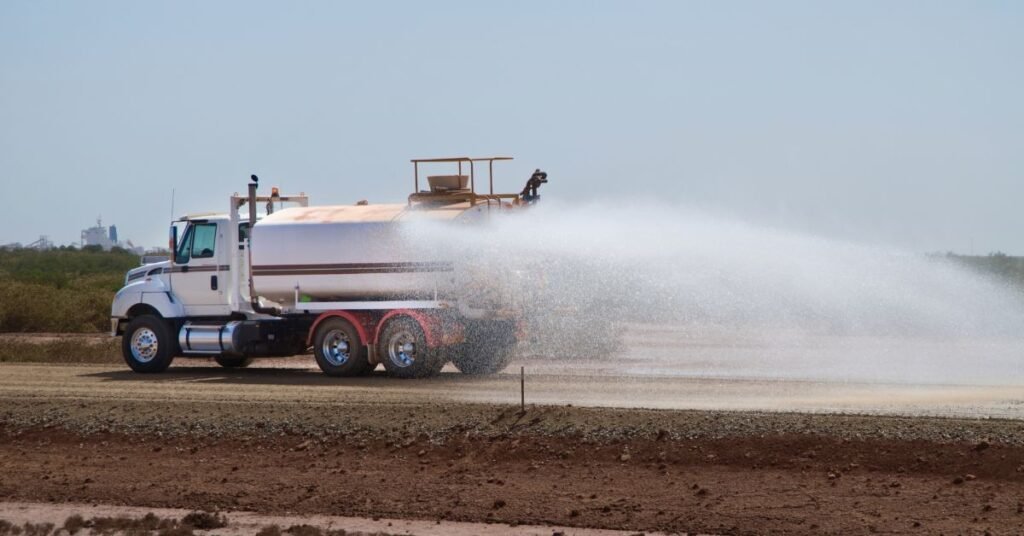
Dust suppression systems are critical for managing airborne particulate matter at demolition sites. These systems not only enhance safety for workers but also protect surrounding communities by reducing health risks associated with dust exposure. Various methods, such as water sprays and chemical treatments, offer distinct advantages and challenges. Understanding the effectiveness of these systems and their implementation is essential for responsible demolition practices. What factors should be considered for ideal dust management?
Dust suppression is a crucial aspect of demolition operations, as it directly impacts both environmental conditions and worker safety. The generation of particulate matter during demolition activities can greatly affect urban air quality, with dust particle size playing a critical role in determining the potential for respiratory and environmental harm.
Finer dust particles, typically measuring less than 10 micrometers, can remain airborne for extended periods, posing a risk to nearby populations. Effective dust suppression strategies mitigate these risks by employing methods such as water spraying, dust suppressants, and barrier systems. These techniques not only reduce airborne dust concentrations but also enhance visibility and overall site safety.
When particulate matter is released into the atmosphere during demolition activities, it poses significant health risks and environmental concerns. Fine dust particles, particularly those smaller than 10 micrometers (PM10), can penetrate deep into the respiratory system, leading to various health implications, including respiratory diseases, cardiovascular issues, and exacerbation of pre-existing conditions.
Prolonged exposure can have detrimental effects on vulnerable populations, such as children and the elderly.
Moreover, the environmental impact of dust extends beyond immediate health risks. Increased particulate matter contributes to air pollution, which can degrade local ecosystems and harm wildlife. Dust can also settle on soil and water sources, disrupting the natural balance and leading to potential long-term ecological damage.
Effective management of dust emissions during demolition is thus essential to mitigate these health implications and environmental impacts, ensuring both public safety and ecological integrity are maintained.
Effective dust suppression systems are critical in managing airborne particulate matter generated during demolition activities. Various types of systems are employed to mitigate dust, each with unique methodologies.
Chemical treatments involve the application of surfactants and binding agents that chemically alter particles to reduce their ability to become airborne. These treatments enhance moisture retention, thereby stabilizing dust on surfaces.
Conversely, evaporation techniques utilize water vapor to suppress dust by increasing humidity levels around the demolition site. This method relies on the principle that moisture in the air can weigh down particles, preventing them from dispersing.
Additionally, evaporation techniques can be optimized through the use of misting systems that finely atomize water, allowing for broader coverage and improved efficiency.
Together, these systems represent a thorough approach to dust management, ensuring a safer and more environmentally responsible demolition process.
Water spray systems utilize pressurized nozzles to distribute fine water droplets, effectively capturing airborne dust particles during demolition activities.
The mechanism operates by increasing humidity in the surrounding air, which aids in settling dust and reducing visibility issues.
Their implementation on demolition sites offers significant benefits, including enhanced worker safety and compliance with environmental regulations.
Numerous studies have demonstrated that water spray systems greatly mitigate dust emissions at demolition sites.
The effectiveness of these systems hinges on the principles of water droplet dynamics, which dictate how droplets interact with airborne dust particles. By optimizing spray patterns, operators can enhance the collision frequency between water droplets and dust, facilitating agglomeration and subsequent settlement.
Proper nozzle selection and configuration are essential in achieving a uniform distribution of droplets, ensuring maximum coverage and minimizing overspray. This optimization not only enhances dust suppression but also conserves water usage.
Understanding these mechanisms allows for the fine-tuning of water spray systems, ultimately leading to more effective dust control strategies tailored to specific demolition scenarios.
While implementing water spray systems at demolition sites, significant benefits arise regarding both efficiency and effectiveness.
These systems facilitate the immediate suppression of airborne dust, thereby minimizing health impacts associated with particulate matter inhalation. By maintaining lower dust levels, water sprays enhance site safety, ensuring a safer working environment for personnel and nearby residents.
The continuous application of water droplets captures and settles dust particles, reducing the need for extensive cleanup operations and allowing for uninterrupted workflow. Additionally, the precise control of water usage optimizes resource consumption, contributing to overall operational efficiency.
How effective are chemical dust suppressants in mitigating airborne particulates at demolition sites?
Chemical dust suppressants, such as lignin sulfonates and polymer emulsions, demonstrate significant chemical effectiveness in reducing dust generation. These agents work by binding soil particles, thereby minimizing the release of particulates into the air.
However, their application raises concerns regarding environmental impact. Many chemical suppressants may contain components that can leach into soil and water systems, potentially causing contamination. Additionally, the long-term effects on local ecosystems remain largely understudied.
While chemical suppressants can enhance air quality during active demolition, their effectiveness is contingent on proper application rates and site conditions. As a result, their use must be weighed against potential environmental risks, necessitating a thorough assessment of both immediate benefits and long-term consequences.
Hence, stakeholders should consider these factors when selecting dust suppression methods for demolition operations.
Misting systems represent a high-tech solution for dust suppression in demolition sites, utilizing efficient water atomization to control airborne particulate matter.
These systems offer notable environmental benefits by minimizing the reliance on chemical dust suppressants, thereby reducing potential ecological impacts.
Additionally, misting systems can be customized to meet specific site requirements, enhancing their effectiveness across various demolition scenarios.
Efficient water atomization plays an essential role in modern dust suppression strategies, particularly on demolition sites where airborne particulate matter poses significant health and safety risks.
The implementation of advanced atomization techniques facilitates the generation of finely dispersed water droplets, which effectively bind to dust particles, preventing their re-entrainment into the atmosphere. Ideal water droplet size is vital; smaller droplets provide an increased surface area for interaction with dust, enhancing the overall efficacy of suppression measures.
Various systems, such as high-pressure misting nozzles, utilize these principles to create a fine mist that saturates the air without excessive water usage.
The integration of misting systems offers significant environmental benefits, particularly in the context of dust suppression at demolition sites. These systems utilize fine water droplets to effectively capture and settle airborne particulates, thereby reducing dust emissions that can negatively impact air quality.
By implementing misting technology, construction companies can enhance sustainability practices, aligning with regulatory standards and promoting ecological responsibility. The reduction of dust not only safeguards worker health but also minimizes the environmental footprint associated with construction activities.
Additionally, misting systems contribute to the preservation of local ecosystems by preventing harmful particulate matter from dispersing into surrounding areas. Overall, the adoption of such advanced solutions reflects a commitment to mitigating ecological impact while ensuring operational efficiency at demolition sites.
A variety of system customization options are available for misting systems, allowing them to be tailored to the specific needs of demolition sites. These customization benefits enhance operational efficiency and dust control effectiveness. Key system features include adjustable nozzle types, variable flow rates, and programmable timers. Such features enable precise control over mist dispersion, optimizing performance according to site conditions.
| Customization Option | Description |
|---|---|
| Nozzle Type | Adjustable for different droplet sizes |
| Flow Rate | Variable settings for specific needs |
| Timer Settings | Programmable for operational flexibility |
| Coverage Area | Customizable based on site dimensions |
| Integration Capability | Compatibility with existing equipment |
These options guarantee that misting systems can be effectively adapted for diverse demolition scenarios.
Although dust generation is an inevitable byproduct of demolition activities, implementing effective dust suppression strategies is vital for maintaining air quality and guaranteeing the safety of workers and nearby residents.
Successful integration of dust control strategies requires thorough demolition project planning, which should include the identification of potential dust sources, assessment of environmental impacts, and selection of appropriate suppression methods.
These methods may involve water spraying, dust-binding agents, or the use of advanced technologies such as fogging systems.
Additionally, establishing a schedule for regular maintenance and monitoring is essential to guarantee the ongoing effectiveness of the chosen dust suppression system.
Training personnel on the proper use and management of dust control measures further enhances compliance and efficiency.
Effective maintenance of dust control systems is essential for ensuring their long-term functionality and efficiency, as consistent performance directly impacts air quality during demolition activities. Implementing regular inspections is vital to identify wear, leaks, or malfunctions in the system.
Establishing extensive maintenance schedules facilitates timely repairs and enhances system performance. Additionally, periodic system upgrades can improve the effectiveness of dust suppression technologies, adapting to evolving industry standards and site-specific conditions.
Operator training is another important component, ensuring that personnel are proficient in the system’s operation and maintenance. Knowledgeable operators can quickly address issues and perform routine checks, thereby minimizing downtime.
By integrating these best practices—regular inspections, structured maintenance schedules, strategic system upgrades, and thorough operator training—demolition sites can sustain ideal dust control, safeguarding both worker health and the surrounding environment.
Prioritizing these measures contributes to a successful and compliant demolition process.
Regulatory compliance in dust management is critical for demolition sites, as it guarantees adherence to environmental standards designed to protect air quality.
Effective dust control methods, such as water spraying and the use of dust suppressants, are essential for meeting these regulations and minimizing airborne particulate matter.
Understanding the specific environmental regulations applicable to a site facilitates the implementation of appropriate dust suppression strategies.
As demolition activities generate significant dust emissions, compliance with environmental regulations is essential for mitigating their impact on air quality.
Various environmental standards dictate permissible dust levels, necessitating adherence to stringent compliance requirements. Regulatory bodies, such as the Environmental Protection Agency (EPA), enforce guidelines that outline effective monitoring and control measures to minimize airborne particulate matter during demolition processes.
Failure to comply with these regulations can result in substantial fines and project delays. Consequently, demolition contractors must implement robust dust suppression strategies and maintain detailed records of compliance efforts to demonstrate adherence to applicable laws.
Understanding these environmental regulations is vital for ensuring operational integrity and protecting public health in areas surrounding demolition sites.
Implementing thorough dust control methods is vital for compliance with environmental standards and effective dust management at demolition sites.
Effective strategies include the application of water sprays, which reduce dust particle size and suppress airborne contaminants. The use of dust suppressants, such as biodegradable polymers, can additionally enhance control by agglomerating fine particles, preventing them from becoming airborne.
Additionally, the implementation of enclosed demolition methods minimizes dust generation during operations. Regular monitoring of dust levels is essential; employing real-time air quality sensors allows for immediate adjustments to dust control measures.
Moreover, training personnel on best practices guarantees adherence to regulatory requirements, thereby mitigating health risks associated with dust exposure and maintaining operational efficiency.
While traditional dust suppression methods have focused primarily on water and chemical agents, emerging technologies are set to revolutionize approaches in demolition sites.
Future innovations are increasingly integrating advanced systems such as electrostatic dust control, which uses charged particles to capture and neutralize dust. Additionally, the application of nanotechnology in dust suppressants is gaining traction, enhancing the efficacy and duration of material performance.
Innovative solutions such as drone-assisted monitoring allow for real-time assessment of dust levels, enabling targeted interventions that optimize resource use. Smart dust suppression systems equipped with sensors can autonomously adjust water application rates based on environmental conditions, thereby improving efficiency.
Moreover, biodegradable and environmentally friendly suppressants are becoming more prevalent, addressing ecological concerns while maintaining performance standards.
The convergence of these technologies signals a shift towards more sustainable and effective dust management strategies in demolition, ultimately enhancing safety and compliance with regulatory standards.
In a serendipitous meeting of timing and necessity, one must consider various factors for ideal system selection tailored to specific project requirements.
Key considerations include the scale of the project, environmental regulations, and the materials involved.
Analyzing the potential dust generation and evaluating site conditions will further refine the choices available.
Ultimately, a systematic approach guarantees that the chosen solution effectively mitigates dust while aligning with the overarching goals of the project at hand.
The costs associated with installing dust suppression systems can vary greatly based on several factors.
Installation expenses typically include equipment purchase, labor, and maintenance.
Budget considerations must take into account the scale of the project, the complexity of the system, and the environmental regulations in place.
Additionally, potential long-term savings from reduced health risks and compliance fines should be factored into the overall financial assessment of the installation process.
Maintenance frequency for systems varies depending on operational conditions and environmental factors.
Regular inspections are essential to guarantee system efficiency, typically recommended on a monthly basis for peak performance.
Components such as nozzles and pumps may require more frequent checks in high-dust environments, while routine maintenance can extend the lifespan of the system.
Construction methods are akin to a symphony, where each instrument must harmonize for safety and efficiency.
Dust suppression systems, much like a conductor, can indeed be applied across various construction activities beyond demolition. Adhering to safety regulations, these systems mitigate airborne particulates during excavation, roadwork, and site preparation.
Their versatile application guarantees a healthier environment for workers and nearby communities, underscoring the importance of integrating such systems into diverse construction practices.
The environmental impacts of chemical dust suppressants are significant and multifaceted.
These substances may lead to chemical impacts on local ecosystems, potentially affecting soil and water quality.
Additionally, the application of such suppressants must adhere to environmental regulations to mitigate adverse effects.
Non-compliance can result in soil contamination and harm to flora and fauna, highlighting the necessity for careful assessment and monitoring when utilizing chemical dust control measures in various construction activities.