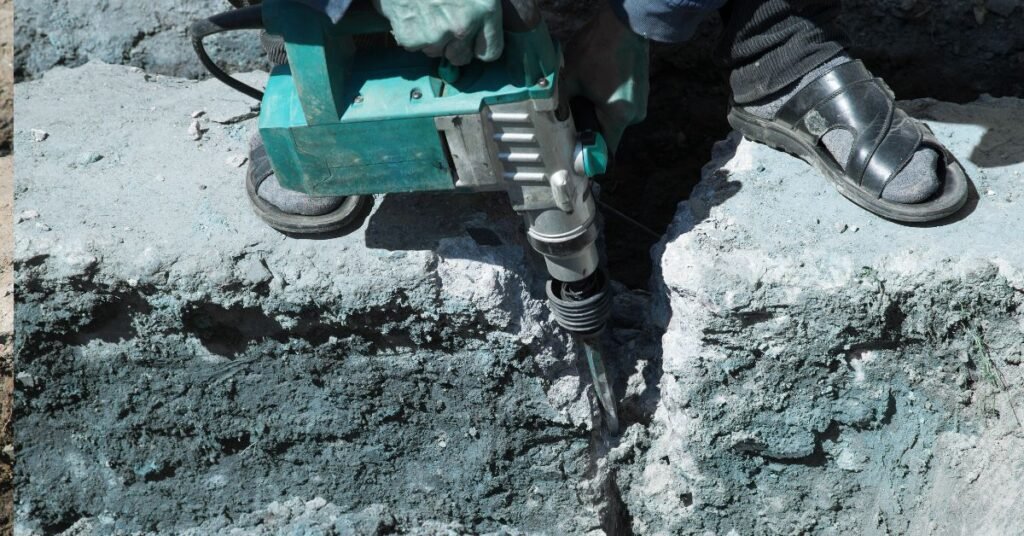
Rammers play a critical role in demolition trench and foundation work. Their high-impact forces efficiently break down concrete and asphalt while ensuring soil compaction. This capability is essential in urban environments, where space constraints exist. Understanding the various types of rammers and their applications can greatly influence project outcomes. However, several factors must be considered when selecting the right rammer for specific tasks. Exploring these elements can lead to more informed decisions in construction practices.
Rammers play an essential role in construction, particularly in demolition work, as they are designed to compact soil and other materials effectively. Their primary function is to increase the density of the material, which enhances the stability of the foundation and minimizes potential settlement issues.
The efficiency of rammers is vital in construction techniques, as they expedite the compaction process, allowing for quicker project completion. By applying high-impact forces, rammers guarantee that the soil or material reaches the desired compaction level, critical for supporting structures.
Additionally, their versatility enables them to be utilized in various settings, from narrow trenches to expansive foundations. Proper utilization of rammers not only improves the structural integrity of the site but also reduces the risk of future complications, making them an indispensable tool in modern construction practices.
Understanding their role contributes considerably to optimizing demolition and construction workflows.
The types of rammers available for demolition work can be categorized into electric, gas-powered, and hydraulic models, each possessing distinct features suited to specific applications.
Electric rammers offer a quieter operation ideal for urban environments, while gas-powered rammers provide greater mobility and power for larger tasks.
Hydraulic rammers, known for their efficiency in heavy-duty applications, excel in situations requiring high force and precision.
Electric rammers are essential tools in demolition and construction projects, designed to efficiently compact soil and other materials. Their electric nature offers several advantages, including reduced emissions and lower noise levels, making them ideal for urban work sites.
The efficiency of electric rammers is notable, as they provide consistent performance without the need for fuel.
Power Source: Operate on electricity, eliminating fuel-related maintenance.
Weight Options: Available in various weights to suit different compaction needs, enhancing versatility.
User-Friendly: Generally lighter and easier to handle, allowing operators to maneuver them with minimal fatigue.
These features contribute to increased productivity and safety in construction environments, maximizing the benefits of electric rammer efficiency.
While electric rammers offer distinct advantages, gas-powered rammers remain a popular choice in demolition work due to their robust performance and versatility.
These rammers are engineered to deliver high-impact force, making them effective for compacting various materials in challenging conditions. Gas efficiency is a notable benefit, as these machines often provide longer operational durations before refueling, enhancing productivity on job sites.
Additionally, they typically incur lower operational costs compared to electric alternatives, particularly in remote locations where electricity access is limited. The portability of gas-powered rammers allows for greater flexibility, enabling operators to tackle diverse tasks without being tethered to power sources.
Consequently, they are an essential tool in the arsenal of professionals engaged in demolition trench and foundation work.
Hydraulic rammers have gained prominence in demolition work due to their efficient performance and adaptability to various applications.
Leveraging hydraulic technology, these rammers offer superior rammer efficiency, making them invaluable on job sites. Their primary applications include:
Soil Compaction: Hydraulic rammers excel at compacting soil in trenches and foundations, ensuring stability for construction.
Breaking Concrete: Equipped with powerful impacts, hydraulic rammers can effectively break through concrete surfaces, facilitating demolition tasks.
Excavation Support: They provide essential support during excavation, preventing soil collapse and ensuring worker safety.
The integration of hydraulic technology not only enhances performance but also allows for precise control, making hydraulic rammers a preferred choice in modern demolition projects.
Rammers play an essential role in demolition work, offering a powerful solution for breaking down various structures. These compact, heavy-duty machines are designed to deliver high-impact force, making them particularly effective in executing demolition techniques such as trenching and surface preparation.
Their ability to penetrate tough materials allows for the efficient dismantling of concrete, asphalt, and other rigid substrates.
Rammer efficiency is vital in minimizing project timelines and reducing labor costs. By employing rammers, contractors can achieve a higher rate of material removal compared to traditional methods, thereby enhancing overall productivity.
Additionally, the vibration and impact generated by rammers help to stabilize surrounding soil, which is critical in urban settings where adjacent structures may be vulnerable.
As a result, rammers not only facilitate effective demolition operations but also contribute to improved safety and project management in demolition work.
In foundation preparation, rammers serve a vital function by compacting soil to create a stable base for structures. Proper compaction of foundation soil is critical to prevent settling and guarantee structural integrity. Rammers apply high-frequency vibrations or impacts to effectively densify the soil, thereby enhancing its load-bearing capacity.
Key aspects of rammers for foundation preparation include:
Soil Type Compatibility: Rammers must be suitable for the specific foundation soil, such as clay, sand, or silt.
Compaction Techniques: Various compaction techniques, including static and dynamic methods, are employed to achieve peak results.
Operational Efficiency: Rammers are designed for ease of use and mobility, enabling operators to work efficiently across different site conditions.
When selecting a rammer for demolition work, two critical factors are weight and size, as these impact maneuverability and effectiveness in compacting various materials.
Additionally, the choice of power source, whether electric or gasoline, can affect operational efficiency and suitability for specific job conditions.
Evaluating these elements guarantees peak performance and safety during demolition tasks.
Selecting the appropriate weight and size of a rammer is essential for effective demolition work, as these factors greatly influence performance and maneuverability.
The right rammer dimensions guarantee that the equipment can access tight spaces while providing adequate weight capacity for efficient compaction.
Key considerations include:
Weight: Heavier rammers provide more force, making them suitable for tougher surfaces but may hinder maneuverability.
Size: Compact rammers can navigate confined areas easily but may lack the power required for larger jobs.
Weight Capacity: Guarantees that the selected rammer can handle the specific materials involved in a demolition project without compromising safety or efficiency.
Choosing the correct weight and size enhances operational effectiveness and project outcomes.
Choosing the right power source for a rammer is crucial, as it directly impacts performance, efficiency, and suitability for specific demolition tasks.
The primary power source options include electric, gasoline, and pneumatic systems. Each option presents distinct advantages and drawbacks, making a power source comparison essential for decision-making.
Electric rammers are known for their energy efficiency, producing lower emissions and reducing operational costs. Conversely, gasoline-powered rammers offer greater mobility and power in remote locations.
Pneumatic options provide consistent performance for heavy-duty applications but require an air compressor.
Ultimately, the choice of power source should align with project requirements, considering factors such as availability, environmental impact, and the specific nature of the demolition work to guarantee ideal results.
Safety is paramount when operating rammers for demolition work, as the proper adherence to guidelines can greatly reduce the risk of accidents. Effective rammer safety protocols not only protect the operator but also guarantee a safe working environment for all personnel on-site.
Thorough operator training is essential to equip individuals with the knowledge needed for safe operations.
Here are three critical safety tips for operating rammers:
Personal Protective Equipment (PPE): Always wear appropriate PPE, including hard hats, safety goggles, gloves, and steel-toed boots, to minimize injury risks.
Pre-Operational Checks: Conduct thorough inspections of the rammer before use, checking for any signs of wear or malfunction to guarantee peak functioning.
Maintain Clear Communication: Establish clear signals and maintain communication with team members to avoid accidents, especially in noisy environments typical of demolition sites.
These measures contribute greatly to enhancing safety during demolition projects.
Regular maintenance and care are essential for ensuring the ideal performance and longevity of rammers used in demolition work. Proper rammer maintenance involves routine inspections, including checking for wear and tear on components such as the rammer foot, engine, and hydraulic systems.
It is imperative to clean the rammer after each use to prevent debris accumulation, which can impede performance. Additionally, lubricating moving parts according to the manufacturer’s specifications enhances operational efficiency and reduces the risk of mechanical failure.
Regularly changing the oil and filters is also critical for maintaining engine health. Rammer care extends to storing the equipment in a dry, secure environment to prevent rust and damage.
Operators should familiarize themselves with the specific maintenance schedule outlined in the user manual, ensuring all tasks are performed timely. Adhering to these practices not only maximizes productivity but also extends the life of the rammer.
Rammers offer unique advantages compared to other compaction equipment, such as plate compactors and rollers, particularly in confined spaces and for specialized demolition tasks.
Their design allows for enhanced rammer efficiency, making them suitable for applications where other equipment may struggle.
The following compaction comparison highlights key differences:
Size and Portability: Rammers are compact and lightweight, easily maneuverable in tight areas, unlike bulkier plate compactors and rollers.
Depth of Compaction: Rammers effectively compact soil and debris to greater depths, providing superior performance in demolition environments where density is vital.
Versatility: Rammers can be used for various materials, including gravel and clay, making them versatile for multiple compaction needs.
The average lifespan of a rammer typically ranges from 5 to 10 years, depending on usage and maintenance practices.
Regular rammer maintenance, including proper cleaning and lubrication, is essential for maximizing its efficiency and longevity. Neglecting maintenance can lead to increased wear and reduced performance.
Additionally, operating the rammer within its specified parameters enhances its durability, ensuring peak functionality throughout its service life.
Proper care ultimately determines the tool’s reliability and effectiveness in various applications.
Rammers are versatile tools utilized in various soil compaction techniques, but their effectiveness can vary across different soil types.
Factors influencing rammer performance include soil moisture content, particle size, and composition. Cohesive soils, such as clay, may benefit from rammers, while granular soils might require different compaction equipment for ideal results.
Understanding these performance factors is essential for selecting the appropriate compaction method to achieve desired density and stability in construction projects.
“Don’t judge a book by its cover” applies to machinery as well. Rammers, designed for compacting soil, exhibit weight variations based on their specifications.
Typically, these machines range from 50 to 200 pounds, depending on their size and intended use. Lighter models are suitable for smaller jobs, while heavier rammers provide greater compaction force for more demanding tasks.
Understanding rammer specifications is essential for selecting the appropriate equipment for specific applications.
The inquiry regarding eco-friendly rammers highlights a growing interest in sustainable construction practices.
Currently, several manufacturers are developing rammers that utilize sustainable materials, such as recycled metals and biodegradable components.
These eco-friendly options aim to reduce environmental impact while maintaining performance.
The noise level of operating a rammer typically ranges between 85 to 100 decibels, depending on the model and usage.
Compliance with noise regulations is essential, as prolonged exposure may cause hearing damage.
To mitigate sound exposure, effective sound insulation measures should be implemented at job sites.
Utilizing acoustic barriers or soundproof enclosures can greatly reduce the impact of noise, promoting a safer working environment while adhering to local noise control standards.