Cone crushers are essential in demolition projects, particularly for secondary crushing applications. Their design allows for effective material reduction, converting concrete and asphalt into usable aggregates. Understanding the mechanics and features of these machines is vital for selecting the right model for specific project needs. Various types exist, each with unique capabilities. The operational efficiencies offered by modern innovations warrant further exploration into their impact on demolition practices.
Cone crushers are essential equipment in the demolition industry, designed to efficiently crush a variety of materials, including concrete and asphalt. The cone crusher design features a conical shape, which allows for the effective reduction of material size through compression. This mechanism not only facilitates the breaking of hard materials but also enhances crushing efficiency.
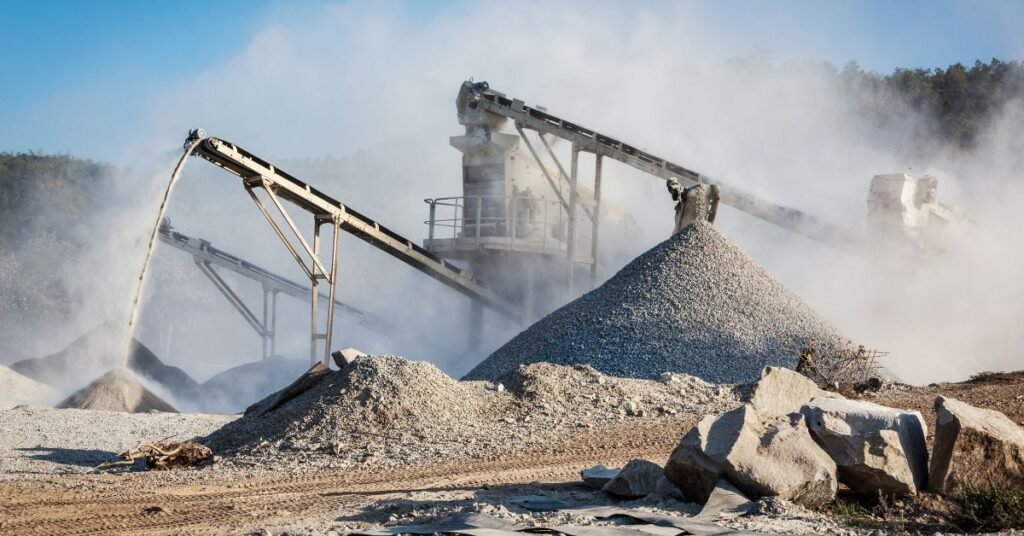
The crushing process involves the material being fed into the top of the machine and subjected to the force generated by a rotating cone within a fixed outer shell. This design optimizes the contact between the material and the crushing surfaces, leading to improved size reduction and consistent output. Additionally, modern cone crushers incorporate advanced technologies, such as hydraulic adjustments and automated controls, which further boost operational efficiency and reduce downtime. Understanding these elements is vital for professionals in the demolition industry, as they seek to maximize productivity and effectiveness in material processing.
Secondary crushing plays an essential role in the overall material processing workflow within the demolition sector. This stage effectively reduces the size of materials that have already undergone primary crushing, thereby maximizing the efficiency of the material handling process. One of the primary secondary crushing benefits is the production of consistently sized aggregate, which is vital for various construction applications.
Utilizing a combination of crushing forces, cone crushers effectively reduce material size through a conical chamber design. The mechanics of a cone crusher involve a rotating mantle that exerts pressure on the material, forcing it against a stationary bowl liner. This action creates a crushing zone where the size reduction occurs, allowing for efficient processing of various materials. The narrowing of the chamber towards the bottom facilitates the passage of smaller particles, enhancing overall crushing efficiency.
Cone crusher mechanics also incorporate hydraulic systems that adjust the gap between the mantle and bowl liner, optimizing performance based on material characteristics. This adaptability not only maximizes throughput but also guarantees consistent product size. Additionally, the design minimizes wear and tear on components, contributing to operational longevity. As a result, cone crushers play a significant role in secondary crushing applications, delivering high performance and reliability in the demolition industry.
Cone crushers are categorized into several types, each designed to meet specific crushing needs. Standard cone crushers are suited for secondary crushing, while short head cone crushers are optimized for finer material reduction. Hydraulic cone crushers offer advanced features and improved performance, making them a popular choice in demolition applications.
Standard cone crushers represent a fundamental type of equipment used in various crushing applications, particularly in the mining and construction sectors. These crushers are designed to reduce material size through a combination of compression and shear forces. With a robust structure and adjustable settings, standard cone crushers provide versatility in processing different materials, including hard rock and aggregates. Performance optimization is achievable through precise control of parameters such as crushing force and stroke length, ensuring maximum throughput and efficiency. Additionally, the ability to fine-tune the crushing chamber allows operators to cater to specific material requirements, leading to enhanced operational productivity. Overall, standard cone crushers play an essential role in achieving effective secondary crushing solutions in demolition projects.
Short head cone crushers are a specialized variation of cone crushing equipment, designed for finer material reduction. These crushers are particularly effective in short head applications where a high-quality, uniform product is essential. They feature a steeper head angle, which facilitates a finer output size compared to standard cone crushers. The short head advantages include enhanced control over the final product’s particle size and improved particle shape, making them ideal for secondary and tertiary crushing in demolition projects. Additionally, they can efficiently process hard, abrasive materials, providing versatility across various applications. By optimizing the crushing process, short head cone crushers contribute considerably to the overall efficiency and effectiveness of demolition operations.
Hydraulic cone crushers represent an advanced type of cone crushing equipment that utilizes hydraulic systems for enhanced operational efficiency and performance. These crushers are designed to optimize cone performance, guaranteeing reduced downtime and improved productivity. Key features include:
With their sophisticated design, hydraulic cone crushers provide a reliable solution for secondary crushing in demolition applications, effectively handling a variety of materials while maintaining high efficiency and performance.
Cone crushers are essential machinery in the demolition industry, known for their robust design and efficient crushing capabilities. One of the key features of these machines is their adjustable closed-side setting, which allows operators to control the size of the output material, enhancing versatility. Additionally, cone crushers often incorporate a hydraulic system that provides automatic overload protection, minimizing potential damage during operation. The design of the crushing chamber is another significant feature, enabling optimized material flow and reducing the likelihood of clogging. Moreover, cone crushers typically possess a high crushing ratio, which translates to effective size reduction, making them ideal for various demolition tasks. Their durability and lower operational costs contribute to the overall cone advantages, providing a reliable solution for secondary crushing applications. These key features collectively enhance performance and efficiency, solidifying the cone crusher’s role in modern demolition practices.
Although various crushing equipment options exist, the advantages of using cone crushers in demolition are notable. These machines are engineered to provide peak performance, making them ideal for secondary crushing in demolition projects. Key benefits include:
These advantages position cone crushers as a preferred choice in the demolition sector, where efficiency and material management are critical for successful project outcomes.
When determining the most suitable cone crusher for a demolition project, several critical factors must be considered to guarantee peak performance and efficiency. Key aspects include the specific project requirements, material type, and desired output size. Different cone crusher features, such as size, power, and capacity, play an essential role in meeting these demands.
| Cone Crusher Features | Project Requirements |
|---|---|
| Size | Maximum feed size |
| Power | Required horsepower |
| Capacity | Tonnage per hour |
Selecting the right model guarantees maximum functionality and can greatly impact production rates. It is crucial to align the cone crusher’s capabilities with the needs of the project, considering factors such as site conditions and material composition. This careful selection process ultimately leads to enhanced productivity and operational success in demolition tasks.
Performance in cone crushers is influenced by various factors, which can greatly affect their efficiency and effectiveness in demolition operations. Key aspects include:
These elements interplay to determine how well a cone crusher performs under specific conditions. Higher material hardness typically necessitates more power and can lead to increased wear, affecting maintenance schedules. Additionally, adjustments to operating parameters can enhance throughput and guarantee that the crusher operates within its designed capacity, ultimately improving its effectiveness in demolition tasks. Understanding these factors is essential for achieving desired outcomes in secondary crushing applications.
Proper maintenance of cone crushers is essential for ensuring optimal performance and longevity in demolition applications. Implementing a preventive maintenance program is critical; it includes regular inspections and servicing of components such as bearings, bushings, and the crushing chamber. Operators should prioritize wear monitoring to detect excessive wear on liners and other significant parts. Utilizing wear indicators can aid in identifying when replacements are necessary, minimizing downtime and preventing catastrophic failures. Regularly checking lubrication levels and ensuring proper fluid quality also plays an important role in maintaining peak operation. Additionally, monitoring the hydraulic system for leaks and maintaining the correct pressure is imperative. Implementing these maintenance practices not only enhances the efficiency of cone crushers but also extends their lifespan, ultimately leading to reduced operational costs and improved safety on demolition sites.
Although cone crushers are essential for efficient demolition operations, safety considerations must take precedence to mitigate risks associated with their use. Proper precautions can notably reduce the likelihood of accidents and injuries.
Cone crushers are integral to various demolition processes, particularly in the crushing of reinforced concrete, which allows for the recovery of valuable materials. Additionally, these machines efficiently reduce asphalt materials, facilitating recycling efforts within construction projects. Their capability to process and recycle demolition debris further enhances sustainability in the demolition industry.
When demolishing structures that incorporate reinforced concrete, effective material processing is essential to project success. Cone crushers play a critical role in achieving ideal results by efficiently breaking down reinforced materials while maintaining concrete integrity. Their design allows for precise material size reduction, facilitating recycling and reuse of the crushed concrete.
Key benefits of using cone crushers for reinforced concrete include:
A significant number of demolition projects involve the removal and processing of asphalt materials, where cone crushers prove invaluable. These machines facilitate asphalt recycling by efficiently crushing and reducing reclaimed asphalt pavement (RAP) into reusable materials. The smaller particle sizes produced by cone crushers enhance material processing, allowing for easier integration into new asphalt mixtures.
| Application | Benefits | Equipment Used |
|---|---|---|
| Asphalt Recycling | Cost-effective reuse | Cone Crushers |
| Material Processing | Improved material quality | Screening Systems |
| Road Construction | Enhanced durability | Aggregate Mixers |
Many demolition projects generate substantial amounts of debris, necessitating effective recycling methods. Cone crushers play a vital role in debris recycling, allowing for the efficient processing of construction waste into reusable materials. Their versatility and efficiency make them ideal for various applications, including:
Although various types of crushing equipment are available in the market, cone crushers offer distinct advantages over alternatives such as jaw crushers and impact crushers, particularly in demolition applications. Cone crushers are engineered to provide superior crushing efficiency, producing a more consistent product size and shape. This is vital in the recycling of demolition debris, where material quality is paramount.
| Equipment Type | Cone Crusher Advantages |
|---|---|
| Jaw Crushers | Lower efficiency in material size control |
| Impact Crushers | Higher wear rates, leading to increased maintenance costs |
In comparison, cone crushers feature a more efficient crushing chamber design, which enhances material throughput while minimizing energy consumption. Their ability to handle a variety of materials, including harder, denser substances, makes them a preferred choice in demolition scenarios, ensuring peak performance and reduced operational downtime.
As advancements in technology continue to reshape the construction and demolition industry, innovations in cone crusher design are enhancing their operational efficiency and versatility. Recent developments have focused on several key areas:
These innovations not only contribute to more efficient demolition processes but also support the industry’s shift toward sustainable practices. By adopting these advanced cone crushers, contractors can guarantee better material recovery while minimizing environmental impact. The ongoing evolution in this technology exemplifies the industry’s commitment to improving operational capabilities and meeting the demands of modern construction challenges.
Cone crushers offer significant environmental benefits in demolition processes by reducing waste generation through efficient material recycling. Their advanced design enhances energy efficiency, leading to lower overall energy consumption during operations. This dual advantage not only minimizes landfill contributions but also promotes sustainable practices within the construction industry.
The implementation of cone crushers in demolition projects greatly contributes to reduced waste generation, aligning with modern sustainability goals. By efficiently processing materials on-site, these machines play a critical role in effective waste management and promote eco-friendly practices. Key benefits include:
While maximizing operational efficiency, cone crushers also offer significant energy efficiency advantages in demolition projects. These machines are designed to consume less energy while delivering high crushing performance, thereby reducing overall energy consumption during operations. The optimized crushing chambers and advanced hydraulic systems enable precise material handling, minimizing energy waste. Additionally, their ability to produce uniformly sized aggregates reduces the need for further processing, contributing to lower operational costs. By utilizing advanced technologies, such as variable speed drives, cone crushers can adapt energy usage based on workload, further enhancing their efficiency. Consequently, employing cone crushers in demolition not only supports sustainable practices but also aligns with industry trends toward reducing the environmental footprint of construction activities.
How will advancements in technology shape the future of cone crushing equipment? The integration of automation advancements and digital monitoring is expected to revolutionize cone crushers, enhancing their efficiency and effectiveness in demolition applications.
As these technologies continue to develop, the cone crushing industry can expect to see machines that are not only more reliable but also smarter, capable of self-optimizing for various material types and conditions. This evolution will ultimately lead to significant advancements in productivity and operational cost-effectiveness in demolition processes.