Dump trucks play an essential role in demolition projects, facilitating efficient debris removal. Two primary types exist: standard dump trucks and articulated dump trucks. Each type has distinct features and advantages tailored to different project needs. Understanding the capabilities of these models is vital for optimizing site operations. The decision between them can greatly impact productivity and safety. What factors should be considered when selecting the right dump truck for a specific demolition endeavor?
Although demolition projects vary in scale and complexity, dump trucks play an important role in the efficient removal and transportation of debris. Effective truck selection is critical, as the type of dump truck utilized can considerably impact demolition efficiency. Factors such as weight capacity, maneuverability, and unloading speed must be considered to guarantee ideal performance on-site.
For instance, larger projects may require heavy-duty trucks capable of transporting substantial loads, while smaller operations might benefit from lighter, more agile models. Additionally, the terrain and access routes can influence the choice of truck, necessitating a careful assessment of site conditions. By selecting the appropriate dump truck, demolition teams can minimize downtime, enhance productivity, and maintain safety standards. Ultimately, understanding the specific needs of a demolition project facilitates better truck selection, which is crucial for achieving timely and effective debris management.
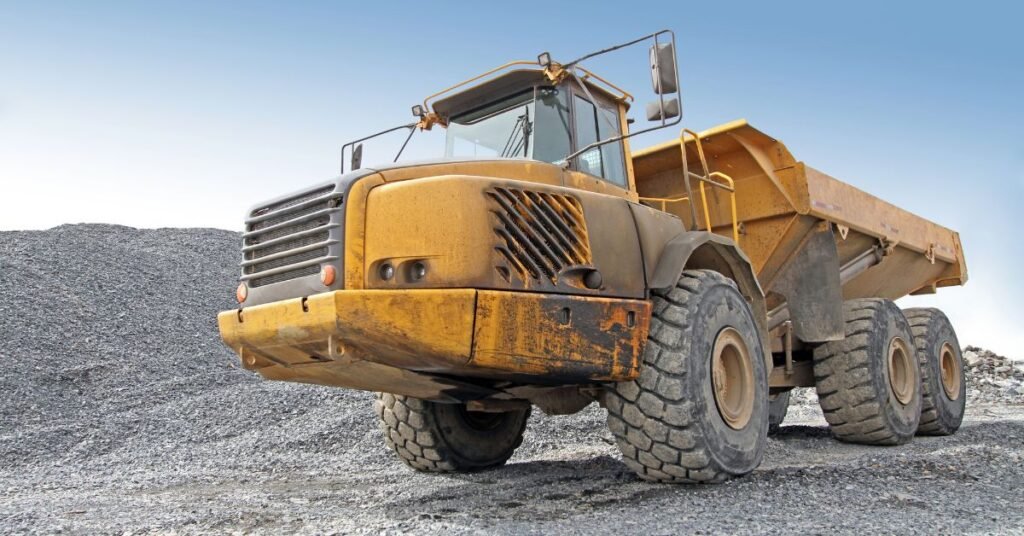
A standard dump truck is characterized by its robust design and structure, featuring a hydraulic lift system that facilitates the unloading of materials. Typically utilized in construction and demolition projects, these vehicles transport a variety of materials, including soil, gravel, and debris. Their payload capacity varies, commonly ranging from 10 to 20 tons, depending on the specific model and configuration.
Dump trucks are essential vehicles in the construction and demolition industries, designed to transport bulk materials efficiently. The design efficiency of standard dump trucks incorporates a robust chassis and a high-capacity cargo bed that can withstand heavy loads. Typically featuring a hydraulic lift system, the structure allows for quick unloading, enhancing operational productivity. The materials used in construction contribute considerably to the structural integrity of the vehicle, ensuring durability and stability under various conditions. Standard dump trucks often possess a straightforward boxy shape, optimizing aerodynamics while maintaining strength. Additionally, safety features are integrated into the design, providing protection for both operators and bystanders. This combination of design efficiency and structural integrity makes standard dump trucks indispensable for demanding tasks in the field.
Standard dump trucks serve a variety of critical functions within the construction and demolition sectors, primarily designed for transporting loose materials such as gravel, sand, dirt, and debris. Their typical applications include site preparation, material relocation, and waste disposal, making them indispensable for efficient project execution. These trucks facilitate swift and effective transport, enhancing operational efficiency on construction sites by reducing the time required for material handling. Additionally, they are frequently utilized in road maintenance and landscaping projects, where the movement of bulk materials is necessary. By providing reliable transportation of various aggregates, standard dump trucks contribute greatly to the overall productivity of construction operations, ensuring that materials are delivered on schedule and projects remain on track.
Payload capacity is a crucial specification for dump trucks, determining the maximum weight of materials they can safely transport. Standard dump trucks typically have payload specifications ranging from 10 to 14 tons, though this can vary based on the truck’s design and construction. Understanding the payload capacity is fundamental for effective load distribution; improper loading can lead to handling difficulties and safety hazards. Factors such as material type, truck configuration, and local regulations also influence the allowable payload. For demolition projects, adhering to these specifications guarantees that trucks operate within safe limits, maximizing efficiency while minimizing the risk of equipment damage or accidents. Accurate assessment of payload capacity is, consequently, critical for successful operational outcomes in demolition tasks.
Integral to the construction and demolition industries, standard dump trucks are designed for efficient transportation of materials. These vehicles typically feature a robust chassis and a hydraulic lift system that allows for quick unloading. Standard features often include a reinforced cargo bed, which is essential for handling heavy loads, as well as a tailgate that can be easily operated to facilitate material release. Truck specifications generally encompass engine power, ranging from 200 to 400 horsepower, which guarantees adequate performance on varied terrains. Additionally, standard dump trucks are equipped with all-wheel drive options, enhancing traction and stability, particularly in challenging conditions. Safety features, such as advanced braking systems and visibility enhancements, are also integral to their design, guaranteeing safe operations on construction sites. The combination of these attributes makes standard dump trucks a reliable choice for transporting demolition debris and construction materials efficiently.
Standard dump trucks offer significant advantages in demolition projects due to their versatile load capacity, enabling them to transport various materials efficiently. Additionally, their enhanced maneuverability options allow for effective navigation in tight spaces commonly encountered at demolition sites. These features contribute to increased productivity and operational flexibility.
While various heavy-duty vehicles serve specific purposes in demolition projects, standard dump trucks stand out due to their versatile load capacity. These trucks are designed to efficiently handle a wide range of materials, including soil, debris, and construction waste. Their robust construction allows for ideal load distribution, which is critical for maintaining stability during transport. Effective weight management is paramount, as it guarantees compliance with legal weight limits and enhances safety on-site. Standard dump trucks can be configured to accommodate varying load sizes, making them adaptable to the specific demands of different demolition tasks. This adaptability not only streamlines operations but also reduces the need for multiple transport vehicles, thereby improving overall project efficiency.
Although many heavy vehicles may struggle with tight spaces, standard dump trucks excel in enhanced maneuverability options, making them ideal for demolition sites with restricted access. These trucks incorporate maneuverability enhancements such as shorter wheelbases and tighter turning radii, enabling operators to navigate confined areas efficiently. Advanced steering systems further improve handling, allowing for precise control during operation. This capability is particularly beneficial in urban environments where obstacles and limited space are prevalent. The combination of these features enhances the overall operational efficiency of standard dump trucks, facilitating quicker loading and unloading processes. Consequently, standard dump trucks are preferred for projects requiring agility, contributing greatly to the successful execution of demolition tasks.
Dump trucks play an essential role in various demolition projects, offering versatile applications that enhance efficiency and productivity. Standard truck configurations are particularly suited for tasks that demand a balance of load capacity and maneuverability. Their robust design allows them to transport debris, soil, and construction materials effectively.
Ideal applications for standard dump trucks include:
An articulated dump truck (ADT) is a specialized vehicle designed for off-road transportation of heavy materials across rugged terrains. Characterized by its articulated design, the ADT consists of two main sections: the front cab and the rear dump body, connected by a pivot joint. This unique configuration allows for enhanced maneuverability in tight spaces and uneven ground, optimizing operational efficiency.
The articulated design also contributes to better weight distribution, enabling the ADT to traverse challenging landscapes without compromising stability. This capability is particularly advantageous in construction and demolition projects, where varied terrain can impede traditional trucks.
Moreover, articulated dump trucks are often equipped with powerful engines and advanced drivetrain systems, further enhancing their ability to transport heavy loads efficiently. Overall, the ADT serves as a crucial asset in heavy material handling, combining specialized engineering with practical functionality to meet the demands of rugged job sites.
Articulated dump trucks (ADTs) are distinguished by several key features that enhance their performance in demanding environments. These features contribute to their operational efficiency and underscore the articulated advantages over traditional dump trucks.
Collectively, these features make articulated dump trucks a crucial asset in demolition and construction projects, ensuring they meet the rigorous demands of the industry.
While conventional dump trucks may suffice for basic tasks, articulated dump trucks (ADTs) offer distinct advantages that greatly enhance operational effectiveness in demolition projects. One of the primary benefits of ADTs is their articulated flexibility, which allows for superior maneuverability in tight spaces and complex job sites. This feature is particularly valuable in demolition scenarios where obstacles abound and precise navigation is essential.
In addition, articulated dump trucks exhibit remarkable terrain adaptability, enabling them to traverse uneven, rugged surfaces with ease. This adaptability minimizes the risk of tipping and enhances load stability, ensuring that materials can be transported safely and efficiently. Moreover, the design of ADTs often incorporates a higher payload capacity, allowing them to carry more material in a single trip. Collectively, these advantages make articulated dump trucks an ideal choice for demolition projects, where terrain challenges and operational efficiency are paramount.
The versatility of articulated dump trucks makes them well-suited for various applications beyond demolition. Their articulated efficiency and terrain adaptability allow them to excel in challenging environments, providing reliable performance in sectors that require heavy load transport.
Ideal applications for articulated dump trucks include:
These trucks are designed to navigate rough landscapes while maintaining a high level of traction and control. Their unique articulation allows them to pivot around obstacles, making them indispensable in projects that involve variable ground conditions. As a result, articulated dump trucks are a preferred choice where versatility and adaptability are paramount.
Maneuverability is a vital factor in the effectiveness of dump trucks, particularly in environments with tight spaces and challenging terrain. The comparison between standard and articulated dump trucks highlights significant differences in maneuverability factors, particularly regarding their turning radius.
| Truck Type | Turning Radius |
|---|---|
| Standard Dump Truck | Larger Radius |
| Articulated Dump Truck | Smaller Radius |
| Ideal for Tight Spaces | Standard |
| Best for Rough Terrain | Articulated |
| Load Capacity | Similar |
Standard dump trucks generally possess a larger turning radius, making them less suitable for confined areas. In contrast, articulated dump trucks, with their unique jointed design, exhibit a reduced turning radius, enhancing their ability to navigate tight corners and rough landscapes. This fundamental difference in maneuverability is essential for demolition tasks requiring precision and agility.
In demolition projects, stability on uneven terrain is a critical factor that affects the performance and safety of dump trucks. Stability concerns arise when the truck is required to navigate rugged landscapes, posing risks of tipping or loss of load. Consequently, the ability to adapt to various terrains is essential for efficient operation.
Key aspects of terrain adaptability include:
Understanding these factors can help operators choose the appropriate dump truck model for specific demolition tasks, ensuring both efficiency and safety in challenging environments.
Cost considerations play a pivotal role in selecting the appropriate dump truck type for demolition projects. A detailed cost analysis is essential to guarantee that the chosen model aligns with the project’s financial parameters. Standard dump trucks typically have lower initial purchase prices and maintenance costs compared to articulated models, which, while often more expensive, offer enhanced maneuverability and load capacity that can justify their higher price.
Budget constraints must also be considered, as they influence not only the acquisition costs but also long-term operational expenses, including fuel efficiency and repair needs. Additionally, the financing options available for each truck type can impact overall project costs. Evaluating the total cost of ownership, including depreciation, can provide a more thorough understanding of the financial implications associated with different dump truck models, ultimately guiding the decision-making process in alignment with the project’s fiscal reality.
Selecting the right dump truck type for demolition projects not only involves financial considerations but also necessitates a focus on maintenance and durability. Proper maintenance plays an essential role in extending the operational lifespan of these vehicles, guaranteeing they withstand the rigors of demolition environments.
Key maintenance tips include:
Durability factors, such as material quality and construction design, also influence the longevity of dump trucks. By prioritizing maintenance and understanding durability factors, operators can substantially improve productivity and reduce long-term costs associated with equipment failure.
While both standard and articulated dump trucks serve important roles in demolition projects, their safety features vary considerably to accommodate different operational demands. Standard models typically incorporate features such as reinforced frames, advanced braking systems, and rollover protection, ensuring compliance with safety regulations. In contrast, articulated dump trucks are designed with additional safety elements, including enhanced visibility, stability controls, and automatic load monitoring systems, which are essential for maneuvering uneven terrain.
Operator training is critical for maximizing the benefits of these safety features; trained operators are more adept at recognizing hazards and implementing safe practices. Additionally, the combination of robust design and thorough training greatly mitigates the risks associated with demolition tasks. Both types of dump trucks must adhere to stringent safety regulations, ensuring that they not only perform efficiently but also protect operators and site personnel from potential accidents.
When selecting a dump truck for a demolition project, it is essential to evaluate the advantages of standard versus articulated models. Standard dump trucks offer superior maneuverability and cost-effectiveness for smaller projects, while articulated dump trucks provide enhanced stability and capacity for larger, more complex tasks. Additionally, considerations regarding the size and scope of the project play a critical role in determining the most suitable truck type.
Standard dump trucks play an essential role in demolition projects, offering numerous advantages that enhance operational efficiency. These vehicles are known for their versatility and reliability, making them a preferred choice among contractors. The benefits of standard dump trucks include:
These standard dump truck benefits notably contribute to standard truck efficiency, ensuring that demolition projects are completed on time and within budget.
Articulated dump trucks offer distinct advantages that make them an excellent choice for demolition projects, particularly in challenging terrains. Their design allows for articulated efficiency, enabling them to navigate tight spaces and uneven ground with ease. This maneuverability is essential in demolition sites where obstacles and debris are prevalent. Additionally, articulated dump trucks provide operational flexibility, accommodating various payloads and materials, which is vital for diverse demolition tasks. Their ability to pivot at the articulation joint enhances stability, reducing the risk of tipping when loaded. Moreover, these trucks often feature advanced suspension systems, improving ride quality and load retention. Consequently, articulated dump trucks are a reliable option for contractors seeking to optimize performance and safety in demolition operations.
Choosing the appropriate dump truck for a demolition project hinges on the size and scale of the operation. Understanding the project scope is essential for effective load management and ensuring safety and efficiency.
Consider the following factors when determining the suitable dump truck type:
Selecting the right dump truck aligns with operational demands and maximizes productivity.