
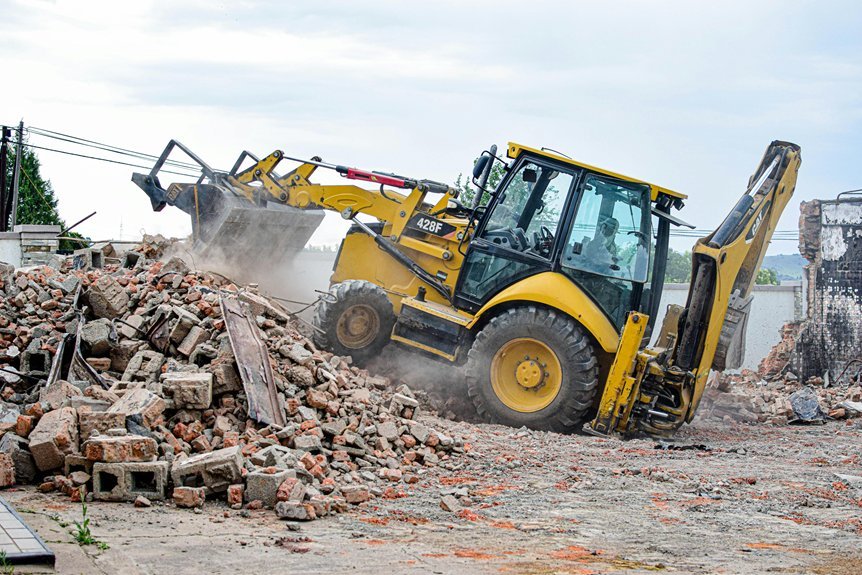
Demolition refers to the systematic dismantling or destruction of buildings. This process necessitates careful planning to guarantee safety and adherence to regulations. Various techniques exist, each suited to specific structures and contexts. Understanding these methods is essential to grasp the nuances of demolition. As urban landscapes evolve, the implications of demolition extend beyond mere destruction. The intersection of safety, environmental impact, and urban development invites further exploration into modern practices and their future.
Understanding Demolition
Demolition, as a systematic process, involves the careful dismantling or destruction of buildings and structures to make way for new construction or renovation. The history of demolition traces back to ancient civilizations, where rudimentary techniques were employed to clear sites for new developments. Over time, the methods and technologies evolved considerably, leading to the sophisticated practices observed today.
Demolition regulations have become increasingly stringent, reflecting concerns over safety, environmental impact, and urban planning. Regulatory frameworks dictate the procedures for obtaining permits, managing hazardous materials, and ensuring structural integrity during the demolition process. Compliance with these regulations is critical to mitigate risks associated with debris, dust, and noise pollution, thereby protecting both workers and surrounding communities. Understanding these historical and regulatory contexts is essential for stakeholders involved in demolition projects, as they navigate the complexities of modern construction and urban development. Additionally, various agencies and local authorities play a pivotal role in enforcing these regulations and ensuring compliance. In Colorado, the Department of Public Health and Environment is one of the key bodies who oversees demolition in Colorado, focusing on safe practices and environmental protection. As urban areas continue to evolve, the collaboration between regulators, contractors, and community members remains vital for sustainable development.
Types of Demolition
Various types of demolition methods are employed based on the specific requirements of a project, the structure in question, and the surrounding environment. Residential demolition typically involves the dismantling of homes and small buildings, focusing on minimizing disruption to neighboring properties. Techniques such as manual demolition, where workers use hand tools, or mechanical demolition, utilizing heavy machinery, are common.
In contrast, industrial demolition pertains to larger facilities, such as factories and warehouses, where more complex methodologies are required. This may involve the use of specialized equipment and a greater emphasis on safety protocols due to hazardous materials and site conditions. Both residential and industrial demolition require careful planning and adherence to local regulations to guarantee efficient and environmentally responsible execution. Understanding these distinctions is vital for stakeholders to select the appropriate method for their specific demolition needs.
Controlled Demolition Techniques
Controlled demolition techniques encompass both explosive and non-explosive methods to safely dismantle structures. Explosive demolition, which utilizes carefully placed charges, is often employed for large-scale projects requiring rapid removal. Conversely, non-explosive techniques, such as mechanical demolition and chemical agents, provide alternative solutions that minimize risk and environmental impact.
Explosive Demolition Methods
Explosive demolition methods represent a sophisticated approach to dismantling structures, utilizing carefully calculated charges to achieve precise outcomes. Primarily, these techniques involve the strategic placement of demolition explosives, designed to weaken structural integrity and facilitate controlled collapse. Among the most common applications are implosion techniques, where explosives are detonated in a specific sequence, causing the building to fall inwardly, minimizing damage to surrounding areas. The precision of these methods relies on meticulous planning and engineering assessments, ensuring that only predetermined sections are compromised. Safety protocols are paramount, as the use of explosives requires thorough risk assessments and coordination with local authorities. Ultimately, explosive demolition methods exemplify an advanced capability to efficiently and safely remove large structures.
Non-Explosive Techniques
While explosive demolition methods offer a powerful means of dismantling structures, non-explosive techniques also play a significant role in the controlled demolition landscape. These methods include various mechanical processes such as hydraulic shears, wire saws, and diamond drilling, which facilitate precise dismantling with minimal noise and disturbance. The use of non-explosive methods is particularly advantageous in urban environments where silent demolition is required to reduce the impact on nearby communities and infrastructure. Additionally, these techniques often lead to safer working conditions by minimizing the risk of accidental detonation. As sustainability becomes increasingly important, non-explosive demolition methods also allow for better material recovery and recycling, aligning with modern environmental standards and practices in the construction industry.
Mechanical Demolition Methods
Mechanical demolition methods encompass a variety of techniques that utilize heavy machinery to dismantle structures efficiently and safely. These methods leverage mechanical advantages provided by hydraulic systems, allowing operators to exert significant force with minimal effort. Common machinery used in mechanical demolition includes excavators, bulldozers, and wrecking balls, each designed for specific tasks. Excavators, equipped with specialized attachments, can selectively target structural components, ensuring precision during the demolition process. The hydraulic systems in these machines enhance their capability by generating powerful movements that facilitate the breaking, cutting, and lifting of heavy materials. Additionally, mechanical demolition methods often result in reduced debris and increased safety for workers, as machinery minimizes direct human involvement in hazardous environments. The efficiency of these methods makes them a preferred choice for large-scale demolitions, where time and safety are paramount considerations.
Manual Demolition Processes
Manual demolition processes encompass a range of techniques and tools specifically designed for dismantling structures without heavy machinery. Essential equipment includes hand tools such as sledgehammers, crowbars, and chisels, which necessitate strict adherence to safety precautions to mitigate risks. Understanding the appropriate techniques for manual demolition is vital for ensuring efficiency and safety during the operation.
Tools and Equipment Used
Demolition requires a variety of specialized tools and equipment to guarantee effective and safe manual processes. Among the essential tools are demolition hammers and concrete saws, which facilitate precise cutting and breaking of materials. Wrecking balls and excavator attachments, such as hydraulic shears, are utilized for larger structures. Air compressors are employed to power pneumatic tools, enhancing efficiency. Dust control equipment is fundamental for maintaining site safety and visibility during operations. Proper site preparation and effective debris removal strategies are critical to guarantee a smooth demolition process. The following table summarizes key tools and equipment used in manual demolition:
| Tool/Equipment | Purpose | Importance |
|---|---|---|
| Demolition Hammers | Breaking concrete | Precision |
| Hydraulic Shears | Cutting metal structures | Efficiency |
| Concrete Saws | Cutting concrete | Versatility |
| Air Compressors | Powering pneumatic tools | Enhanced performance |
Safety Precautions Required
Although demolition projects can be efficient and effective, the inherent risks necessitate strict adherence to safety precautions. A thorough hazard assessment is essential prior to initiating manual demolition processes, as it identifies potential dangers such as falling debris and hazardous materials. Workers must be equipped with appropriate protective gear, including hard hats, safety goggles, gloves, and steel-toed boots, to mitigate injury risks. Additionally, the establishment of exclusion zones guarantees that unauthorized personnel remain at a safe distance from active demolition sites. Implementing protocols for emergency response and regular safety briefings further enhances worker safety. By prioritizing these precautions, teams can greatly reduce the likelihood of accidents, fostering a safer working environment throughout the demolition process.
Techniques for Manual Demolition
Effective manual demolition techniques require a strategic approach to guarantee safety and efficiency. These methods often employ hand tools such as sledgehammers, pry bars, and chisels, which allow for precise control during the dismantling process. Workers must assess the structure to identify load-bearing elements and potential hazards, ensuring that demolition occurs in a controlled manner. Techniques like selective demolition focus on removing specific sections while preserving others, minimizing waste and disruption. Additionally, proper sequencing of demolition tasks is essential to maintain structural integrity throughout the process. By adhering to these manual demolition techniques, workers can achieve effective results while prioritizing safety and environmental considerations, ultimately leading to a successful demolition project.
Environmental Considerations in Demolition
When considering the demolition process, it is essential to evaluate the environmental implications associated with the removal of structures. The adoption of sustainability practices is imperative to mitigate negative impacts on ecosystems. Effective waste management strategies must be implemented to enhance recycling and reuse of materials, thereby minimizing landfill contributions.
Demolition projects often generate substantial amounts of debris, including concrete, metals, and hazardous substances. Proper sorting and segregation are essential for ensuring that recyclable materials are diverted from landfills. Additionally, the use of eco-friendly demolition techniques, such as deconstruction, can further support sustainability objectives by preserving valuable resources.
Furthermore, assessments of environmental impact should include carbon footprint analysis and potential effects on local biodiversity. By prioritizing these considerations, demolition practices can evolve towards more sustainable methodologies that align with broader environmental goals, fostering responsible development and resource conservation.
Safety Protocols in Demolition
Safety during demolition is a critical aspect that demands meticulous planning and execution to prevent accidents and protect workers and the surrounding community. Effective safety protocols encompass several essential elements, including thorough safety training and extensive hazard assessments.
Key safety protocols in demolition include:
- Safety Training: Providing workers with extensive training on equipment usage and potential hazards.
- Hazard Assessment: Conducting detailed evaluations of the site to identify risks associated with structural integrity and hazardous materials.
- Personal Protective Equipment (PPE): Ensuring that all personnel are equipped with appropriate PPE such as helmets, gloves, and respiratory gear.
- Emergency Response Plans: Establishing clear procedures for emergencies, including evacuation routes and first aid measures.
Implementing these protocols not only mitigates risks but also fosters a culture of safety, ultimately enhancing the overall effectiveness of demolition projects.
The Role of Demolition in Urban Development
Demolition serves a critical function in urban development, particularly within the context of urban renewal projects, where outdated or deteriorating structures must be removed to facilitate new constructions. This process necessitates adherence to stringent safety protocols and regulatory frameworks to mitigate risks associated with demolition activities. As cities evolve, the strategic planning of demolition efforts becomes essential for fostering sustainable growth and revitalization.
Urban Renewal Projects
Although urban renewal projects often aim to revitalize communities and stimulate economic growth, the role of demolition is critical in this process. Effective urban revitalization strategies frequently necessitate the removal of dilapidated structures to make way for modern developments. This strategic demolition supports community engagement initiatives by fostering a sense of renewal and participation among residents. Key aspects of this process include:
- Clearing Obsolete Infrastructure – Removing outdated buildings enhances safety and aesthetic appeal.
- Facilitating New Construction – Demolition paves the way for new developments that meet contemporary needs.
- Encouraging Economic Investment – Revitalized areas attract businesses and investors.
- Promoting Social Cohesion – New spaces foster community interaction and improved quality of life.
Through these actions, demolition serves as a catalyst for significant urban transformation.
Safety and Regulations
The process of urban renewal, while focused on revitalizing communities, inherently involves stringent safety protocols and regulatory frameworks governing demolition activities. Effective safety training is essential for personnel engaged in demolition, guaranteeing that they are well-prepared to manage hazards associated with structural dismantling. Compliance with local, state, and federal regulations is mandatory, addressing environmental concerns, waste management, and public safety. Regulatory compliance encompasses obtaining necessary permits and adhering to guidelines that mitigate risks during demolition. Additionally, inspections and audits are frequently conducted to guarantee adherence to safety standards. The integration of safety training and regulatory compliance not only protects workers but also fosters a sustainable approach to urban development, ultimately facilitating safer and more efficient demolition practices.
Demolition vs. Deconstruction
While often conflated, demolition and deconstruction represent distinct approaches to the dismantling of structures. Demolition typically involves the rapid and complete destruction of a building, emphasizing efficiency and speed. In contrast, deconstruction focuses on a methodical dismantling process aimed at salvaging materials for reuse.
The following list highlights key differences:
- Demolition Benefits: Quick, cost-effective, and suitable for structures without historical significance.
- Deconstruction Advantages: Environmentally friendly, promotes recycling, and preserves valuable materials.
- Waste Generation: Demolition tends to produce more waste, while deconstruction minimizes landfill contributions.
- Labor Intensity: Deconstruction requires skilled labor for careful disassembly, unlike the heavy machinery often used in demolition.
Understanding these distinctions is essential for stakeholders in construction and sustainability, as choosing the appropriate method can influence economic, environmental, and social outcomes.
The Future of Demolition Practices
As urbanization accelerates and sustainability becomes paramount, the future of demolition practices is likely to evolve markedly. Industry experts anticipate future innovations that prioritize eco-friendly methodologies and resource recovery. Advanced technologies, such as robotic demolition and drone surveying, will enhance precision and efficiency, reducing waste and minimizing environmental impact.
Sustainable practices, including the reclamation of materials for reuse, will become standard. This shift not only conserves resources but also supports circular economy principles, where materials are continually repurposed rather than discarded. Additionally, regulatory frameworks are expected to tighten, pushing demolition companies to adopt greener methods to comply with emerging environmental standards.
The integration of Building Information Modeling (BIM) will facilitate strategic planning, enabling more effective assessment of structures prior to demolition. Overall, the convergence of technology and sustainability will redefine demolition, making it a vital component of responsible urban development.
Conclusion
In summary, demolition is a critical component of urban development, facilitating the shift from obsolete structures to innovative spaces. While some may envision demolition as mere destruction, it embodies a meticulous orchestration of techniques aimed at safety and sustainability. Picture a once-dilapidated site transformed into a vibrant community hub, showcasing how thoughtful demolition practices not only reshape skylines but also rejuvenate neighborhoods, paving the way for progress while honoring the complexities of urban renewal.