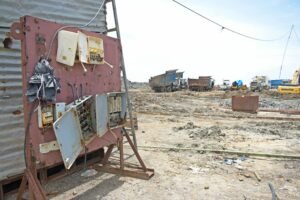

Controlled partial collapse techniques represent a strategic approach in the field of demolition. These methods aim to intentionally weaken specific structural components while maintaining overall stability. This precision requires an in-depth understanding of load dynamics and structural integrity. As urban environments grow denser, the demand for such techniques is increasing. The implications for safety and efficiency in demolition practices warrant further exploration of their applications and advancements in technology.
Understanding Controlled Partial Collapse
Controlled partial collapse refers to a strategic approach in engineering and demolition where specific sections of a structure are intentionally compromised while maintaining the integrity of the remaining components. This technique is essential in controlled demolition, as it allows for the systematic dismantling of structures without complete destruction. By carefully analyzing the structural integrity of the building, engineers identify which elements can be safely removed or weakened to achieve the desired outcome.
In practice, controlled partial collapse requires precise calculations and methodologies to guarantee that the remaining structure can support itself adequately during and after the process. Various factors, including material properties, load distribution, and environmental conditions, are meticulously considered. The successful implementation of this technique minimizes risks, enhances safety, and reduces collateral damage, making it a preferred choice in urban settings. Overall, controlled partial collapse represents a sophisticated blend of engineering principles and demolition practices aimed at preserving structural integrity.
Key Principles of Partial Collapse Techniques
The key principles of partial collapse techniques encompass critical aspects such as safety protocols, structural assessment, and execution methods. Adherence to established safety protocols guarantees the protection of personnel and surrounding structures during the collapse process. Additionally, thorough structural assessments are essential for identifying weaknesses and informing the controlled execution of collapse strategies.
Safety Protocols in Practice
Although safety protocols are essential in any engineering operation, their importance is magnified in the context of partial collapse techniques. Effective safety training is critical for all personnel involved, ensuring they understand the risks and procedures associated with controlled collapses. Emergency protocols must be rigorously established and practiced, encompassing evacuation plans, communication strategies, and roles for each team member during a crisis. These protocols should be regularly updated based on new insights or incidents, reflecting a commitment to continuous improvement. Additionally, the implementation of real-time monitoring systems can enhance situational awareness, allowing for proactive responses to potential hazards. Ultimately, a robust safety culture, grounded in thorough training and clear emergency protocols, is crucial for minimizing risks in partial collapse scenarios.
Structural Assessment Importance
While effective partial collapse techniques can enhance demolition efficiency, the significance of detailed structural evaluation cannot be overstated. Ensuring structural integrity is paramount, as it directly influences the success of the operation and safety of personnel. Key factors include:
- Material Evaluation: Evaluating the condition and properties of materials to avoid unintended failures.
- Load Distribution Analysis: Understanding how loads are transferred through the structure aids in planning controlled collapses.
- Historical Data Review: Utilizing previous evaluations and performance data to inform current strategies enhances decision-making.
Employing rigorous evaluation methods allows for a thorough understanding of the structure, facilitating informed planning and execution of partial collapse techniques, thereby mitigating risks associated with demolition activities.
Techniques for Controlled Execution
Effective execution of controlled partial collapse techniques hinges on a meticulous application of key principles that govern structural integrity and safety. Central to these principles are precision timing and demolition sequencing, which guarantee that each phase of the collapse occurs as intended. Precision timing involves the careful coordination of explosives or mechanical forces to achieve specific outcomes without unintended consequences. Demolition sequencing refers to the strategic order in which structural elements are removed or compromised, thereby controlling the path of collapse and minimizing risk to surrounding structures and personnel. By adhering to these principles, engineers can effectively manage the dynamics of partial collapse, allowing for safe and efficient demolition processes that align with project objectives and regulatory standards.
Applications in Urban Demolition Projects
In urban demolition projects, the implementation of controlled partial collapse techniques necessitates rigorous safety measures to protect workers and surrounding infrastructure. Additionally, these techniques must consider the environmental impact, addressing potential debris management and noise pollution during the demolition process. A thorough analysis of both safety protocols and environmental assessments is essential for optimizing project outcomes.
Safety Measures Employed
A thorough array of safety measures is essential in urban demolition projects employing controlled partial collapse techniques. These measures guarantee the protection of workers and nearby structures, particularly in densely populated areas. Key components include:
- Safety Equipment: Personal protective gear, including helmets, goggles, and harnesses, is mandatory to mitigate injury risks.
- Emergency Protocols: Extensive emergency response plans must be established to address potential accidents, including immediate evacuation procedures and first aid readiness.
- Site Monitoring: Continuous monitoring of structural integrity and environmental conditions is crucial to anticipate hazards and facilitate timely interventions.
Environmental Impact Considerations
While urban demolition projects utilizing controlled partial collapse techniques are primarily focused on efficiency and safety, their environmental impact must also be meticulously assessed. These techniques can greatly influence sustainability practices by minimizing debris and optimizing material recovery, thereby reducing the ecological footprint of demolition activities. The strategic planning of controlled partial collapses allows for the preservation of nearby structures and ecosystems, which is paramount in urban settings. Additionally, the implementation of dust suppression measures and noise reduction strategies further mitigates environmental disturbances. By prioritizing these considerations, demolition projects can align with broader urban sustainability goals, contributing to a reduced environmental impact while facilitating the redevelopment of urban areas. Ultimately, careful planning and execution are essential for balancing efficiency with ecological responsibility.
Safety Considerations and Risk Management
Effective safety considerations and risk management are paramount in the implementation of controlled partial collapse techniques. A thorough approach must be adopted, emphasizing the importance of risk assessment and hazard identification to mitigate potential dangers. The following key steps are essential for guaranteeing safety:
- Pre-Operation Risk Assessment: Thorough evaluation of the site to identify structural weaknesses and environmental hazards prior to initiating collapse techniques.
- Hazard Identification: Systematic identification of potential risks, including nearby structures, utilities, and personnel, to develop strategic safety protocols.
- Emergency Response Planning: Establishing clear strategies for emergency situations, including evacuation routes and communication plans, to ensure prompt action if unforeseen incidents occur.
Advantages Over Traditional Demolition Methods
Controlled partial collapse techniques offer several advantages over traditional demolition methods, particularly regarding safety, efficiency, and environmental impact. One notable benefit is the enhanced precision demolition capabilities, allowing operators to target specific structural elements while minimizing collateral damage. This precision reduces the risk of unintended impacts on surrounding structures, thereby ensuring a safer work environment.
Additionally, these techniques often lead to significant cost effectiveness. By concentrating efforts on selective demolition, contractors can reduce labor hours and material disposal costs, ultimately lowering project expenses. The efficiency of controlled partial collapses also streamlines the demolition process, enabling quicker project turnover with less disruption to nearby operations.
Moreover, environmental benefits arise from the reduced waste generated through targeted demolition strategies. By preserving usable materials and decreasing debris, controlled partial collapse methods align with sustainable practices, making them a preferred choice in modern demolition projects.
Future Trends in Controlled Collapse Techniques
The evolution of controlled partial collapse techniques is poised to reshape demolition practices in the coming years. As the industry adapts to emerging technologies, several key trends are anticipated:
- Automation Advancements: The integration of robotics and drones will enhance precision and safety during demolition, reducing human risk and increasing operational efficiency.
- Predictive Modeling: Advanced algorithms will enable better forecasting of structural behavior, allowing for tailored collapse strategies that minimize collateral damage and optimize resource allocation.
- Sustainability Practices: Emphasis on recycling and waste reduction will lead to innovative methods that guarantee materials from demolished structures are repurposed or recycled effectively.
These trends signify a shift toward more efficient, safe, and environmentally responsible demolition methodologies. As controlled partial collapse techniques evolve, their implementation will likely set new industry standards, driving continuous improvement and innovation in demolition practices.
Conclusion
To sum up, controlled partial collapse techniques represent a significant advancement in demolition practices, combining safety and efficiency. By meticulously analyzing structural integrity and load distribution, these methods minimize environmental impact while reducing costs. As urban landscapes evolve, one must ponder: how will the future of demolition transform our cities, ensuring both safety and sustainability? With ongoing innovations, including robotics, the potential for improved precision and effectiveness in controlled collapses continues to expand, redefining industry standards.