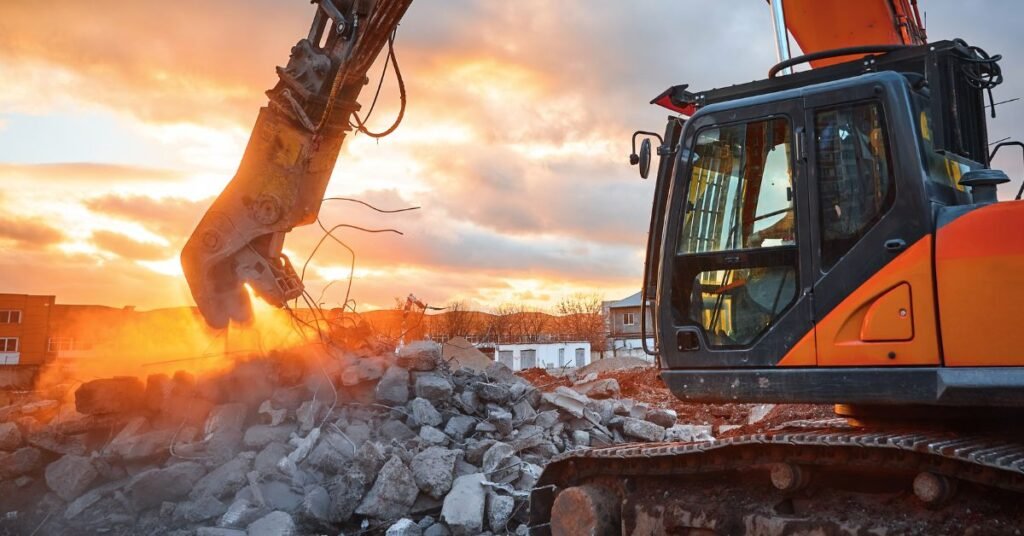
Concrete crushers and pulverizers serve as essential attachments in the demolition industry, designed to efficiently dismantle concrete structures. These tools employ advanced hydraulic systems and impact mechanisms to break concrete into manageable pieces. Various models offer distinct features tailored for specific applications, enhancing both safety and efficiency. Understanding the intricacies of these attachments is important for effective utilization. The subsequent sections will explore the types, maintenance, and innovations that define modern concrete demolition practices.
Concrete crushers are essential tools in the demolition industry, designed to efficiently break down concrete structures into manageable pieces. These machines utilize various crushing techniques, including jaw crushing, impact crushing, and cone crushing, to achieve peak results. Each technique offers distinct advantages regarding force application and material reduction, contributing to overall demolition efficiency.
For instance, jaw crushers employ a compressive force, effectively fracturing concrete, while impact crushers utilize high-speed impacts to shatter materials. The choice of technique often depends on the specific requirements of the demolition project, including the type of concrete, the desired size of the output, and the environmental considerations.
Demolition professionals rely on various types of concrete crushers, each engineered to address specific project needs and material characteristics. The selection of a suitable crusher can greatly affect the efficiency and outcome of demolition tasks.
| Crusher Type | Description | Ideal Use |
|---|---|---|
| Mobile Concrete | Portable units for on-site demolition | Urban and hard-to-reach areas |
| Hydraulic Concrete | Utilizes hydraulic power for enhanced force | Heavy-duty and reinforced structures |
| Jaw Crusher | Features a fixed and moving jaw | Primary crushing stages |
| Impact Crusher | Delivers high-speed impact forces | Recyclable materials |
Each type of concrete crusher, from mobile concrete to hydraulic concrete, offers unique advantages, making them indispensable tools in the demolition industry. Understanding these variations enables professionals to select the most effective equipment for their specific projects.
When selecting a concrete crusher for a demolition project, it is essential to contemplate a variety of key features that enhance functionality and performance. These features often incorporate cutting edge technology and durability enhancements, ensuring efficiency and longevity in demanding environments.
The versatility of concrete crushers extends beyond mere demolition, finding applications across various sectors and projects. In construction and renovation, these machines enhance demolition efficiency by swiftly breaking down structures, allowing for faster site clearance and subsequent development phases. Moreover, concrete crushers facilitate the recycling of materials, transforming debris into reusable aggregates. This process not only minimizes landfill waste but also supports sustainable building practices by providing high-quality recycled material for new construction projects.
Additionally, concrete crushers are employed in infrastructure maintenance, where they assist in the removal of damaged or outdated concrete elements, ensuring safety and functionality. Their role in environmental remediation projects is also significant, as they help in the safe dismantling of contaminated concrete, enabling proper disposal or recycling of hazardous materials. Overall, concrete crushers serve as essential tools in modern construction, promoting efficiency and sustainability in various applications.
Concrete pulverizers play an essential role in the demolition and recycling industries, specifically designed to crush and pulverize concrete structures into fine particles. These attachments enhance operational efficiency, making them invaluable for various applications. Understanding concrete pulverizers involves recognizing their key features and benefits:
Incorporating concrete pulverizers into demolition projects not only streamlines processes but also supports sustainable practices by facilitating material recycling. Understanding these aspects is vital for optimizing their use in the field.
Various types of concrete pulverizers exist to cater to different demolition and recycling needs, each designed with specific features that enhance their operational effectiveness. Hydraulic attachments are commonly classified into two main categories: fixed and rotating pulverizers. Fixed pulverizers are designed for straightforward material processing, providing efficient crushing and pulverizing without the need for rotation. Conversely, rotating pulverizers offer enhanced maneuverability, allowing operators to easily position the attachment for ideal material access and processing.
Additionally, some models incorporate interchangeable teeth or blades to accommodate various concrete types, enhancing versatility in demolition tasks. These tools are critical in breaking down concrete structures while minimizing noise and dust, making them suitable for urban environments. Their robust construction guarantees durability and reliability, enabling contractors to meet project timelines while achieving effective material recycling. Each type serves distinct purposes, ultimately contributing to efficient and sustainable demolition practices.
While selecting the appropriate concrete pulverizer for a specific demolition project, understanding the key features that define these attachments is vital. Modern concrete pulverizers incorporate advanced features and design innovations to enhance efficiency and performance. The following attributes are significant:
These features collectively enhance the effectiveness of concrete pulverizers, making them indispensable tools in modern demolition operations. Understanding these elements is vital for efficient project execution.
Utilizing concrete pulverizers in demolition projects greatly enhances efficiency and effectiveness. These specialized attachments are instrumental in executing advanced demolition techniques that prioritize both speed and precision. By breaking down large concrete structures into manageable pieces, pulverizers facilitate the swift removal of debris, considerably reducing downtime on construction sites.
Furthermore, concrete pulverizers play an essential role in material recycling. The pulverized concrete can be repurposed for various applications, such as road base material or new concrete mixes, promoting sustainable construction practices. This not only minimizes landfill waste but also contributes to the circular economy in the construction industry.
In addition to their recycling benefits, concrete pulverizers are adept at handling reinforced concrete, ensuring that steel rebar is efficiently separated during the pulverization process. Overall, these attachments are fundamental for modern demolition practices, optimizing both operational workflow and environmental stewardship.
In the context of demolition, crushers and pulverizers serve distinct yet complementary functions. Crushers are designed primarily to break down large materials into smaller, manageable sizes, making them suitable for initial material reduction. Conversely, pulverizers excel in further processing by grinding materials into fine particles, thereby enhancing their usability in various applications.
Although both crushers and pulverizers serve the essential function of breaking down materials in demolition processes, their operational mechanisms and end results differ markedly. The functionality comparison reveals distinct attributes that influence operational efficiency:
These differences highlight the importance of selecting the appropriate attachment for specific demolition tasks.
When determining the most suitable application for demolition tasks, the distinctions between crushers and pulverizers become increasingly significant. Crushers are optimal for breaking large concrete structures into manageable pieces, enhancing application efficiency during initial demolition phases. They excel in handling bulk material, allowing for quick site clearance and facilitating project scalability. Conversely, pulverizers are designed for finer material processing, ensuring that concrete is reduced to a powder-like consistency ideal for recycling or landfill preparation. This capability is particularly crucial in projects where material reuse is essential, aligning with sustainable practices. Understanding these differences enables operators to select the appropriate attachment, maximizing overall performance and effectiveness in various demolition scenarios.
How does one determine the most suitable demolition attachment for a specific project? Selecting the correct attachment involves careful consideration of several factors to guarantee peak performance and efficiency. Key elements include:
In demolition operations, adherence to safety considerations is paramount for ensuring worker protection and operational efficiency. Key elements include the consistent use of personal protective equipment (PPE), strict equipment inspection protocols to identify potential failures, and extensive worksite hazard awareness to mitigate risks. By implementing these measures, the likelihood of accidents and injuries can be considerably reduced, fostering a safer working environment.
Although demolition work often involves heavy machinery and hazardous materials, the safety of personnel remains paramount, necessitating the use of appropriate personal protective equipment (PPE). Adhering to safety standards is vital, as the right protective gear can greatly reduce the risk of injury.
Key items of PPE for demolition work include:
Employing these essential items of protective gear will help guarantee a safer working environment for all personnel involved in demolition activities.
A thorough equipment inspection protocol is essential for ensuring safety and operational efficiency during demolition projects. Regular inspections help identify potential issues affecting equipment functionality, thereby minimizing downtime and enhancing safety. Utilizing detailed inspection checklists allows operators to systematically evaluate each component of concrete crushers and pulverizers. These checklists should cover critical areas such as hydraulic systems, wear and tear on cutting edges, and overall structural integrity. Operators must document findings and address any deficiencies promptly to maintain compliance with safety regulations. In addition, adherence to established inspection protocols fosters a culture of safety, ensuring that all personnel are aware of the equipment’s condition and potential hazards. This proactive approach greatly reduces the risk of accidents on-site, contributing to a safer work environment.
Worksite hazard awareness is a critical component of safety management in demolition environments. Effective hazard identification plays an essential role in guaranteeing worksite safety and preventing accidents. Key considerations include:
Regular maintenance of demolition attachments is essential for ensuring peak performance and longevity. Implementing effective attachment longevity strategies begins with routine inspections and regular wear assessments. Operators should check for signs of wear on critical components, such as teeth, blades, and hydraulic systems, to identify potential issues before they escalate. Lubrication is also crucial; appropriate grease and oil must be applied according to manufacturer specifications to minimize friction and prevent premature wear. Additionally, cleaning the attachments after each use helps remove debris that can cause damage over time. Operators should also monitor hydraulic fluid levels and inspect hoses for leaks to maintain ideal hydraulic pressure. By adhering to these maintenance practices, operators can extend the life of their demolition attachments, ensuring they remain efficient and reliable throughout their operational lifespan. Proper care not only enhances performance but also contributes to safety on the worksite.
The cost factors associated with crushers and pulverizers are critical for budget planning in demolition projects. Key components include the initial purchase price of the equipment and the ongoing maintenance and operating costs, which can greatly impact total expenditure. Understanding these financial considerations is essential for maximizing efficiency and ensuring the profitability of demolition operations.
Purchasing crushers and pulverizers involves a variety of cost factors that can greatly influence the overall investment. Buyers must carefully evaluate their budget considerations and explore equipment financing options to maximize their return on investment. Key factors include:
Understanding these elements is essential for making informed purchasing decisions that align with financial goals and operational needs.
While acquiring crushers and pulverizers is an important step, understanding maintenance and operating costs is equally essential for long-term financial planning. These costs include routine maintenance, wear part replacements, and energy consumption, which greatly influence overall operational efficiency. Regular maintenance guarantees peak performance and reduces downtime, directly impacting productivity. Additionally, the type and frequency of maintenance can vary based on usage intensity and material processed, making it vital to evaluate these factors before selection. Long-term investments in high-quality equipment typically yield lower operational costs over time, as they are designed for durability and reduced wear. Ultimately, a thorough understanding of these expenses can lead to informed decisions that enhance profitability and operational success.
As advancements in technology continue to reshape the construction industry, innovations in demolition attachments are emerging to enhance efficiency, safety, and versatility on job sites. These advancements leverage smart technology and advanced materials to improve performance and reduce operational costs. Key innovations include:
These developments not only facilitate more precise demolition but also contribute to a safer working environment. By embracing these innovations, contractors can achieve higher productivity and lower operational costs, ultimately redefining standard practices in demolition projects.
The examination of case studies in effective use of demolition attachments reveals successful project implementations across various scenarios. These instances highlight innovative techniques utilized to enhance efficiency and safety in demolition processes. A thorough analysis of these applications illustrates the practical benefits and advancements achieved through the integration of specialized equipment.
Demolition projects often hinge on the effective use of specialized attachments that enhance operational efficiency and safety. Successful implementations demonstrate the importance of meticulous project management and robust team collaboration. Remarkable case studies reveal essential elements that contribute to project success:
These elements underscore the significance of strategic planning and teamwork, ultimately leading to successful demolition operations that maximize productivity while adhering to safety standards.
While traditional methods of demolition have their merits, innovative techniques are increasingly being adopted to enhance efficiency and reduce environmental impact. One notable approach involves the integration of robotic attachments, which facilitate precise dismantling of structures with minimal waste generation. For instance, a case study in urban redevelopment showcased a robotic arm equipped with a concrete crusher, allowing operators to safely navigate confined spaces and reduce noise pollution. Additionally, sustainable demolition practices emphasize the reuse and recycling of materials, further minimizing landfill contributions. By employing advanced technologies like robotic attachments in conjunction with sustainable strategies, demolition projects can achieve higher efficiency and lower ecological footprints, leading the industry toward a greener future. These innovations represent a significant shift in demolition methodologies.