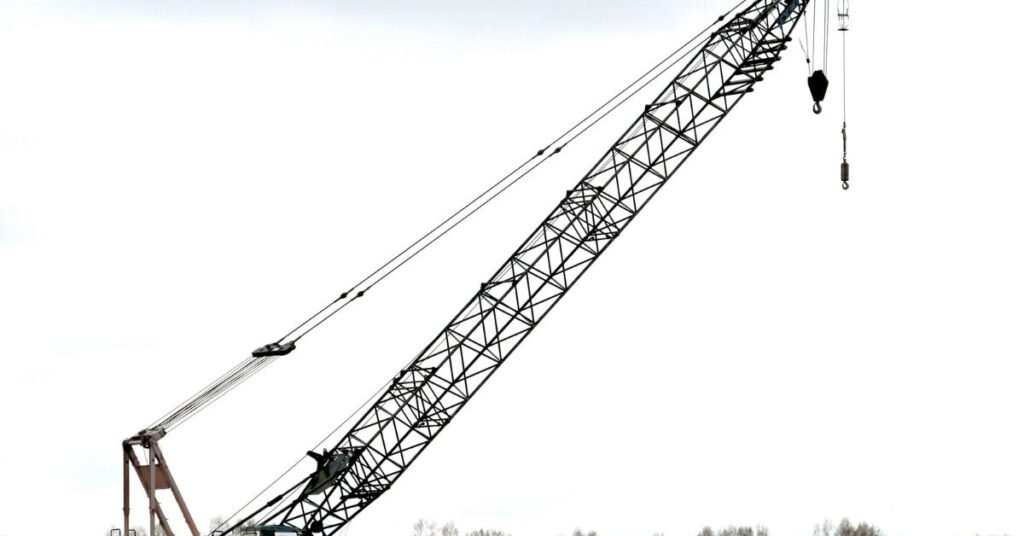
Crawler cranes are integral to demolition operations, providing robust lifting capacity and stability essential for dismantling heavy structures. Their hydraulic mechanisms enable precise handling of various loads, while wide tracks facilitate movement across challenging terrains. Furthermore, advanced safety features mitigate operational risks. As the demand for efficient and eco-friendly demolition practices rises, understanding the role of crawler cranes becomes increasingly important. What innovations are shaping their future in this sector?
Crawler cranes are sophisticated machines designed specifically for heavy lifting and demolition tasks. The primary mechanics of a crawler crane involve a robust undercarriage equipped with tracks, allowing for stability and mobility across various terrains. Central to these operations is the hydraulic system, which utilizes high-pressure fluid to power the crane’s boom, enabling it to lift substantial weights with precision.
Key components include the boom, which extends and retracts to reach different heights, and the counterweights that maintain balance during operation. The operator’s cabin, often equipped with advanced controls, allows for intricate maneuvering of the crane. The hydraulic systems are integral, facilitating smooth shifts and adjustments, critical in demolition projects where precision is paramount. Overall, understanding crawler crane mechanics and their hydraulic systems is essential for maximizing efficiency and safety in heavy lifting and demolition applications.
While various lifting equipment exist, crawler cranes stand out for their unique advantages in demolition projects. One of the primary crawler crane advantages is their exceptional stability, which is vital when handling heavy loads in complex environments. This stability enhances demolition efficiency, allowing for precise lifting and maneuvering of structural components without compromising safety.
Furthermore, crawler cranes possess the ability to navigate uneven terrain, which is often encountered during demolition operations. This adaptability minimizes downtime and maximizes operational productivity. The modular design of crawler cranes enables quick attachment changes, facilitating the use of specialized tools for various demolition tasks.
Additionally, their extensive reach allows operators to dismantle structures from considerable distances, reducing the risk of hazards to personnel on-site. Overall, the integration of crawler cranes in demolition projects greatly boosts operational effectiveness while ensuring safety and precision in executing complex tasks.
The adaptability of crawler cranes to various terrain conditions greatly enhances their utility in demolition operations. These cranes are engineered to navigate difficult landscapes, including soft soil, uneven ground, and steep inclines, thanks to their wide tracks that distribute weight effectively. Prior to deployment, a thorough terrain evaluation is essential to assess ground stability and identify potential hazards. By ensuring a solid foundation, crawler cranes can operate efficiently and safely, minimizing the risk of accidents or equipment failure.
Moreover, their capacity to adjust to different ground conditions allows for greater flexibility in project planning and execution. In scenarios where traditional cranes may falter, crawler cranes maintain operational integrity, thereby optimizing demolition timelines. Their robust design and capability to traverse various terrains make them indispensable in complex demolition projects, reinforcing the importance of selecting the appropriate machinery based on terrain evaluation and ground stability assessments.
Equipped with advanced safety features, crawler cranes are designed to minimize risks associated with demolition tasks. These cranes comply with stringent safety regulations, guaranteeing that they meet industry standards for operation. Key safety features include load moment indicators, which prevent overload by providing real-time data on weight distribution and lifting capacity. Additionally, many models are equipped with anti-collision technology to avert accidents during operation.
Operator training is essential in maximizing the effectiveness of these safety features. Training programs emphasize the importance of understanding crane dynamics, proper load handling, and emergency procedures. This education guarantees that operators can respond effectively to potential hazards, enhancing overall site safety.
Regular maintenance checks also play an important role in safety management, guaranteeing that all components function correctly. By integrating these safety features and training protocols, crawler cranes greatly reduce the likelihood of accidents, thereby promoting a safer demolition environment.
Selecting the appropriate crawler crane for demolition projects necessitates careful consideration of several crucial factors. Load capacity must align with the weight of materials to be lifted, while terrain adaptability is essential for operational efficiency on varying ground conditions. Additionally, reach and height requirements play an important role in ensuring that the crane can effectively access and maneuver around the demolition site.
Load capacity stands as a crucial factor in choosing the appropriate crawler crane for demolition projects. It determines the maximum weight a crane can safely lift and is essential for guaranteeing operational safety and efficiency. Evaluating load capacity involves understanding not only the crane’s rated limits but also how weight distribution affects stability during lifting operations. Uneven weight distribution can lead to tipping or structural failure, making it important to assess both the load’s weight and its center of gravity. Additionally, the intended demolition tasks must align with the crane’s load capacity to prevent overloading. As a result, careful consideration of these parameters guarantees that the selected crawler crane can effectively meet the demands of demolition while maintaining safety standards.
When evaluating the terrain adaptability of crawler cranes for demolition tasks, it is vital to take into account the specific characteristics of the job site. Various terrain types present distinct environmental challenges that can greatly affect crane performance. Consider the following factors:
Selecting the appropriate crawler crane based on these factors is vital for optimizing efficiency and safety in demolition operations.
Determining the appropriate reach and height requirements for a crawler crane is essential to guarantee effective demolition operations. These specifications directly influence the selection of equipment, ensuring that the crane can operate efficiently within the constraints of a project site. Reach limitations must be carefully evaluated, taking into account the distances between the crane and the structures being dismantled. Height specifications are equally critical; the crane must possess the capability to access upper levels of buildings while maintaining stability. Failure to meet these requirements can lead to operational inefficiencies and potential hazards. Consequently, thorough assessments of both reach and height are necessary to align crane capabilities with demolition objectives, ultimately enhancing safety and performance throughout the project lifecycle.
Crawler cranes have emerged as pivotal assets in the field of demolition, exemplifying their effectiveness through various high-profile projects. Case studies reveal significant project highlights that underscore their capabilities:
High-Rise Building Demolition: A crawler crane was employed to dismantle a 30-story structure in an urban environment, showcasing its ability to operate in confined spaces while maintaining stability and precision.
Bridge Deconstruction: In a complex bridge demolition, the crawler crane facilitated the safe removal of heavy steel girders, demonstrating its lifting power and versatility in challenging conditions.
Industrial Facility Take-Down: The dismantling of an outdated manufacturing plant illustrated the crawler crane’s efficiency in handling multiple loads, allowing for rapid project completion while minimizing downtime.
These case studies collectively highlight the integral role of crawler cranes in modern demolition techniques, emphasizing their adaptability and reliability in diverse operational contexts.
Innovation in crawler crane technology is poised to redefine demolition practices, driven by advancements in automation, telematics, and environmental sustainability. The integration of autonomous operation in crawler cranes enhances efficiency, allowing for precision in lifting and dismantling processes while minimizing human error. This shift towards automation not only streamlines operations but also facilitates real-time data monitoring, improving safety and operational decision-making.
Moreover, the emphasis on sustainable materials in construction and demolition is reshaping industry standards. Future crawler cranes may incorporate eco-friendly design principles, utilizing lighter, recyclable components that reduce environmental impact. Additionally, as regulations around sustainability tighten, the ability to efficiently dismantle structures while preserving and reusing materials becomes increasingly critical. As these trends converge, the crawler crane will evolve into a more versatile and responsible tool, aligning demolition practices with contemporary ecological and technological demands.
In the domain of heavy lifting, crawler cranes stand tall, their robust frames gripping the earth like a giant’s hand. They offer advantages such as superior stability and mobility on uneven terrain, making them ideal for demolition sites. However, their limitations include slower setup times and reduced maneuverability in confined spaces compared to other crane types. Consequently, while crawler cranes excel in certain environments, their effectiveness may wane in more restricted settings.
The average cost of renting a crawler crane varies markedly due to several cost factors. Rental pricing typically ranges between $2,000 to $5,000 per day, influenced by equipment size, rental duration, and geographic location. Additionally, the complexity of the project and the need for specialized attachments may further impact expenses. Understanding these variables is essential for accurately estimating the overall financial commitment required when considering a crawler crane rental for various construction applications.
The setup time for heavy machinery often influences operational efficiency, and crawler cranes are no exception. Typically, it can take anywhere from four to eight hours to set up a crawler crane, depending on several factors such as site conditions and the specific model. This duration is critical, as it directly impacts crane efficiency during subsequent tasks. Understanding this timeframe allows for better project scheduling and resource allocation in construction and engineering projects.
Crawler cranes are indeed suitable for urban demolition projects due to their capability to navigate tight spaces and provide stable lifting operations. Their design allows for heavy lifting while adhering to stringent safety regulations, which is essential in urban infrastructure environments. Additionally, their versatility enables them to handle various demolition tasks efficiently. The combination of mobility and compliance with safety standards makes crawler cranes a valuable asset in urban demolition scenarios.
What maintenance protocols guarantee peak performance during heavy lifting operations? Crawler cranes require rigorous preventive maintenance, which includes regular inspections of critical components such as hydraulic systems, tracks, and hoisting mechanisms. Adhering to established inspection protocols is essential to identify wear and prevent failures. Additionally, operators must monitor fluid levels, check for leaks, and assess safety features to maintain operational integrity and extend the crane’s lifespan in demanding environments.