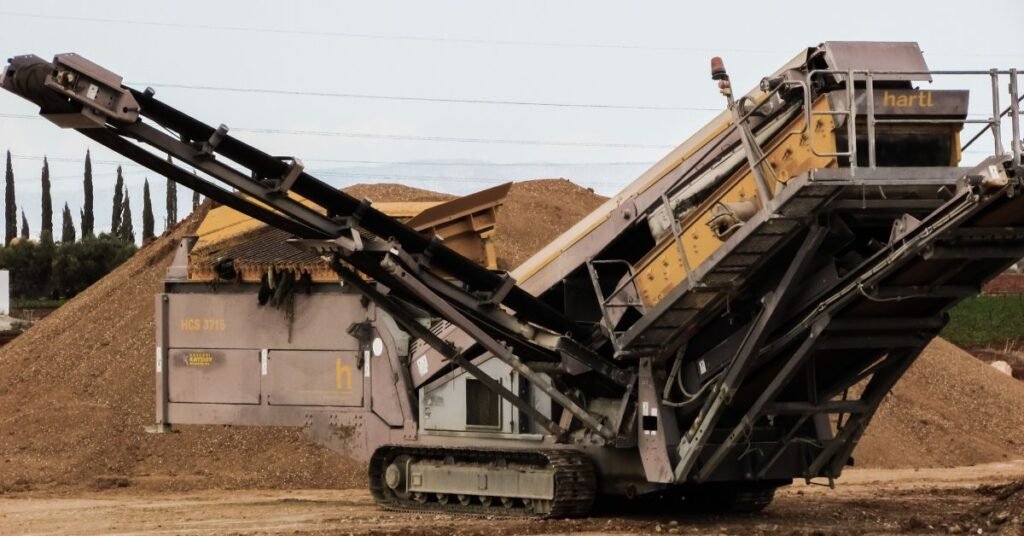
Crushers and screening plants are integral to the efficiency of demolition projects. These machines guarantee that materials are effectively broken down and sorted for recycling. Various types of crushers, such as jaw, impact, and cone, offer distinct advantages based on material properties. Additionally, advancements in technology enhance operational capabilities. Understanding these elements is essential for optimizing resource recovery and minimizing waste in construction practices. What implications do these technologies hold for future demolition strategies?
Crushers and screening plants are vital machinery in the demolition and recycling industry, serving to reduce and separate materials efficiently. Crushers technology has evolved considerably, incorporating advanced mechanisms that enhance their operational efficiency and effectiveness. Modern crushers utilize hydraulic systems and automated controls, allowing for precise material size reduction while minimizing energy consumption.
Screening advancements complement these technologies by improving the segregation of recycled materials. High-frequency screens and vibratory classifiers are now standard, enabling the effective separation of fine and coarse aggregates. These advancements facilitate better material recovery rates and guarantee compliance with environmental regulations.
In this dynamic landscape, the synergy between crushers and screening plants is essential for optimizing demolition processes. By integrating sophisticated technologies, operators can achieve greater productivity and sustainability, ultimately transforming construction waste into valuable resources for future projects.
In the demolition sector, various types of crushers are employed to address the diverse challenges of material reduction. Primarily, impact crushers, cone crushers, and hammer crushers are utilized for their distinct capabilities. Impact crushers are effective for breaking down concrete and asphalt, offering high throughput and the ability to process large volumes of material quickly. Cone crushers, on the other hand, are ideal for reducing hard materials and producing a fine aggregate for reuse. Hammer crushers, with their high-speed rotating hammers, are designed for softer materials, efficiently pulverizing debris. Each type of crusher serves a specific purpose within demolition equipment, ensuring that operators can select the most suitable device for their project needs. By understanding the unique characteristics of these types of crushers, demolition professionals can optimize their operations, enhance productivity, and contribute to sustainable waste management practices.
Jaw crushers are renowned for their high crushing efficiency, enabling the reduction of large materials into manageable sizes. Their robust design allows for versatility across various applications, making them suitable for different demolition projects. This combination of efficiency and adaptability establishes jaw crushers as essential equipment in the demolition industry.
While various crushing technologies exist, jaw crushers stand out for their efficiency and effectiveness in demolition projects. These machines utilize a specific crushing technique that involves compressing material between two plates, resulting in a high reduction ratio. The efficiency metrics of jaw crushers are notable, as they can process large volumes of material rapidly while maintaining a consistent output size. This efficiency is further enhanced by features such as adjustable settings that allow operators to customize the size of the crushed material. Additionally, the robust construction of jaw crushers guarantees durability and long operational life, making them a reliable choice for demanding demolition tasks. Ultimately, their combination of efficiency and reliability makes jaw crushers indispensable in the industry.
Though often associated with primary crushing, jaw crushers exhibit remarkable versatility across a range of applications in the demolition industry. Their adaptable machinery is engineered to handle varying material types, from concrete to asphalt, making them suitable for multi-use applications. This flexibility allows operators to efficiently process different materials on-site, reducing the need for multiple machines. Additionally, the ability to adjust the discharge opening enhances their operational range, enabling the production of desired particle sizes for specific project requirements. With robust construction and reliable performance, jaw crushers can effectively tackle diverse demolition tasks, such as recycling materials and preparing sites for new construction. Their adaptability ultimately contributes to increased productivity and cost-efficiency in demolition projects.
Impact crushers are recognized for their ability to efficiently reduce a variety of materials, making them essential in demolition projects. Their unique design enables effective material reduction techniques, facilitating the processing of concrete, asphalt, and other debris. This versatility allows impact crushers to be widely applied across different demolition scenarios, enhancing operational productivity.
As construction and demolition projects increasingly prioritize efficiency, impact crushers have emerged as an essential component in material processing. The impact crusher advantages include their ability to produce high-quality aggregates with minimal operational costs. These machines utilize a unique crushing mechanism that allows for rapid and effective material reduction, enhancing productivity. Furthermore, impact crushers offer efficiency benefits by minimizing energy consumption while maximizing output. Their design facilitates a straightforward maintenance process, reducing downtime and ensuring consistent performance. Additionally, these crushers are versatile, capable of handling various materials, which further contributes to their appeal in diverse project applications. Ultimately, the strategic deployment of impact crushers can greatly improve project timelines and operational efficiency in the demolition industry.
When considering material reduction techniques in demolition projects, impact crushers stand out for their efficiency and effectiveness in processing various materials. These machines utilize high-speed rotors equipped with hammers to deliver powerful impacts, breaking down concrete, asphalt, and other debris into smaller, manageable pieces. The design of impact crushers allows for the rapid and uniform reduction of materials, facilitating seamless recycling innovations. By optimizing material processing, impact crushers not only enhance recycling efforts but also contribute to sustainable construction practices. Their ability to handle diverse materials while maintaining high throughput rates makes them indispensable in the demolition industry. Ultimately, impact crushers exemplify the integration of technology and efficiency, ensuring effective material reduction in a rapidly evolving sector.
Utilizing impact crushers in demolition projects greatly enhances the efficiency of material processing. These machines excel in reducing large volumes of concrete and debris, facilitating effective debris management. Their design allows for rapid processing and minimal downtime, making them ideal for various demolition techniques. The ability to produce finely crushed material contributes to recycling efforts and cost savings.
| Feature | Benefit |
|---|---|
| High Impact Force | Efficient material reduction |
| Versatile Design | Adaptable to multiple applications |
| Low Operating Costs | Cost-effective for demolition |
| Quick Setup | Reduces project completion time |
| Improved Safety | Minimizes risks on-site |
Incorporating impact crushers into demolition practices guarantees streamlined operations and enhances overall project efficiency.
Cone crushers play a pivotal role in the production of high-quality aggregates, essential for various construction and demolition projects. These machines are engineered to provide superior crushing performance, ensuring that the resulting aggregate meets stringent quality standards. Effective cone crusher maintenance is vital for optimizing operational efficiency and prolonging equipment lifespan.
Key benefits of cone crushers in aggregate production include:
Screening plants serve an essential function in the waste separation process, complementing the role of cone crushers in aggregate production. These plants are critical in effective waste management, as they facilitate the efficient sorting of materials generated during demolition projects. By employing various screening techniques, operators can classify debris by size, shape, and type, thereby enhancing the recycling potential of the materials recovered.
The importance of material sorting cannot be overstated, as it directly influences the quality of recycled aggregates. Properly sorted materials reduce contamination, making them more suitable for reuse in construction applications. Additionally, screening plants contribute to operational efficiency by minimizing the volume of waste sent to landfills. Ultimately, the integration of screening plants into demolition operations streamlines the waste management process, ensuring that valuable resources are recovered and reintroduced into the supply chain, fostering sustainability within the construction industry.
While both mobile and stationary crushing equipment offer unique advantages, the choice between them largely depends on the specific requirements of a demolition project. Mobile crushing equipment provides mobility and flexibility, enabling operations directly on-site. This can lead to reduced transportation costs and time savings. However, stationary crushing equipment often boasts higher production rates and durability, making it suitable for larger, centralized demolition projects.
Key considerations include:
Ultimately, understanding these factors allows project managers to select the most efficient crushing solution tailored to their specific demolition needs.
As demolition projects increasingly prioritize sustainability, crushers play a pivotal role in minimizing environmental impact and promoting resource recovery. These machines are essential for implementing sustainable practices by efficiently breaking down concrete, asphalt, and other materials for reuse. Crushers facilitate the sorting and processing of debris, enabling the extraction of valuable resources that would otherwise contribute to landfill waste.
Incorporating ecological innovations, modern crushers are designed to optimize energy consumption and reduce emissions during operation. Advanced features, such as adjustable settings and automation, enhance the efficiency of material processing, further supporting sustainability goals. By converting construction and demolition waste into reusable aggregates, crushers not only alleviate the demand for virgin materials but also contribute to a circular economy.
Ultimately, the integration of crushers in demolition projects exemplifies a commitment to sustainable development, aligning with broader environmental objectives and promoting responsible resource management.
Recycling materials from demolition projects offers significant environmental benefits by reducing landfill waste and conserving natural resources. Additionally, it presents cost-saving opportunities for construction companies through the repurposing of materials, minimizing disposal expenses, and decreasing the need for new materials. Such practices align with sustainable development goals, promoting a circular economy in the construction industry.
Reducing environmental impact during demolition projects hinges considerably on the recycling of materials. Implementing sustainable practices and adopting eco-friendly technologies play a pivotal role in minimizing waste and conserving natural resources. The benefits of recycling materials from demolition extend beyond mere waste reduction, including:
While demolition projects often incur significant costs, the strategic recycling of materials presents substantial opportunities for cost savings. By implementing effective budget optimization strategies, contractors can reduce expenses associated with landfill fees and raw material procurement. Recycling concrete, metals, and other materials not only minimizes waste but also enhances resource allocation efficiency, allowing for better use of available funds. Utilization of crushers and screening plants facilitates the processing of salvaged materials, transforming them into reusable resources for future projects. This approach not only supports sustainable practices but also mitigates the financial burden on demolition firms. Ultimately, integrating recycling into demolition operations can lead to significant financial advantages, reinforcing the value of sustainable construction practices in the industry.
How does one determine the most suitable equipment for demolition projects? The process of equipment selection is vital and hinges on a thorough understanding of the project specifications. Key considerations include the type of material to be demolished, site accessibility, and the desired outcomes.
Safety considerations play an essential role in demolition operations, as the potential hazards associated with heavy machinery and unstable structures can pose considerable risks to workers and bystanders. Effective hazard awareness is vital to identifying and mitigating risks throughout the demolition process. Workers must be trained to recognize potential dangers, such as falling debris, electrical hazards, and exposure to hazardous materials.
The use of personal protective equipment (PPE) is mandatory to guarantee worker safety. Hard hats, safety goggles, gloves, and steel-toed boots are standard requirements on demolition sites. Additionally, high-visibility clothing aids in preventing accidents involving equipment.
Establishing a thorough safety protocol, including regular safety meetings and inspections, fosters an environment where hazard awareness is prioritized. By adhering to safety measures and utilizing appropriate PPE, the risk of accidents and injuries during demolition operations can be markedly reduced, safeguarding not only workers but also the surrounding community.
Numerous case studies highlight the successful execution of demolition projects that exemplify best practices in planning, safety, and execution. A thorough case study analysis reveals effective strategies for overcoming common demolition challenges, contributing to safer and more efficient operations.
Key findings include:
These case studies serve as valuable resources, showcasing how a systematic methodology can address demolition challenges while promoting sustainability. The insights gained from these examples provide a framework for future projects, ensuring that safety and efficiency remain at the forefront of demolition practices.
As the crushing and screening industry evolves, automation is becoming increasingly integral to optimizing operational efficiency and precision. Furthermore, sustainable material recycling techniques are gaining traction, enabling more effective recovery of valuable resources from demolition waste. These trends are shaping the future landscape of demolition processes, emphasizing both productivity and environmental responsibility.
While the traditional methods of crushing and screening have served the industry well, the integration of automation is poised to revolutionize these processes. Automated crushing systems enhance efficiency and reliability, allowing for real-time monitoring and adjustments. This shift towards automation is not only about increased productivity but also about process optimization. Key advancements include:
These innovations enable operators to maximize output while minimizing operational costs. As automation continues to evolve, the industry can expect significant improvements in material handling, leading to a more streamlined and effective approach to crushing and screening in demolition projects.
A growing emphasis on sustainable material recycling techniques is transforming the landscape of crushing and screening technology in demolition projects. The adoption of sustainable methods enhances resource recovery while minimizing environmental impact. Recycling innovations, such as mobile crushers equipped with advanced separation systems, enable the efficient processing of concrete, metals, and other materials on-site. These technologies facilitate the reuse of aggregates, markedly reducing landfill waste and lowering the carbon footprint associated with transportation. In addition, automated sorting systems are improving the accuracy of material recovery, ensuring higher quality recycled products. As the industry progresses, the integration of sustainable practices into crushing and screening operations will become increasingly essential, aligning with global efforts toward circular economy principles in construction and demolition sectors.
Recycling in demolition projects presents significant cost-effectiveness, especially when considering the reduction of landfill expenses and the potential for repurposing materials. The economic benefits of recycling are substantial, often influenced by recycling incentives provided by local governments. These incentives encourage contractors to adopt sustainable practices, ultimately enhancing their financial performance.
Key factors contributing to the cost-effectiveness of recycling in demolition include:
The cost-effectiveness of recycling in demolition projects is closely intertwined with the framework of environmental regulations that govern waste management practices. Regulatory compliance is essential, as failure to adhere to local, state, and federal guidelines can result in significant penalties and project delays. These regulations often mandate the separation and recycling of materials, ensuring that hazardous substances are appropriately managed to minimize environmental impact.
Furthermore, the push for environmental sustainability has led to stricter standards for emissions and waste disposal associated with demolition activities. Demolition contractors must implement practices that align with these regulations, such as utilizing crushers and screening plants designed to optimize material recovery and reduce waste. By prioritizing regulatory compliance, companies not only enhance their operational efficiency but also contribute positively to environmental sustainability, reinforcing the importance of responsible demolition practices in the construction industry.