Demolition Power Tools
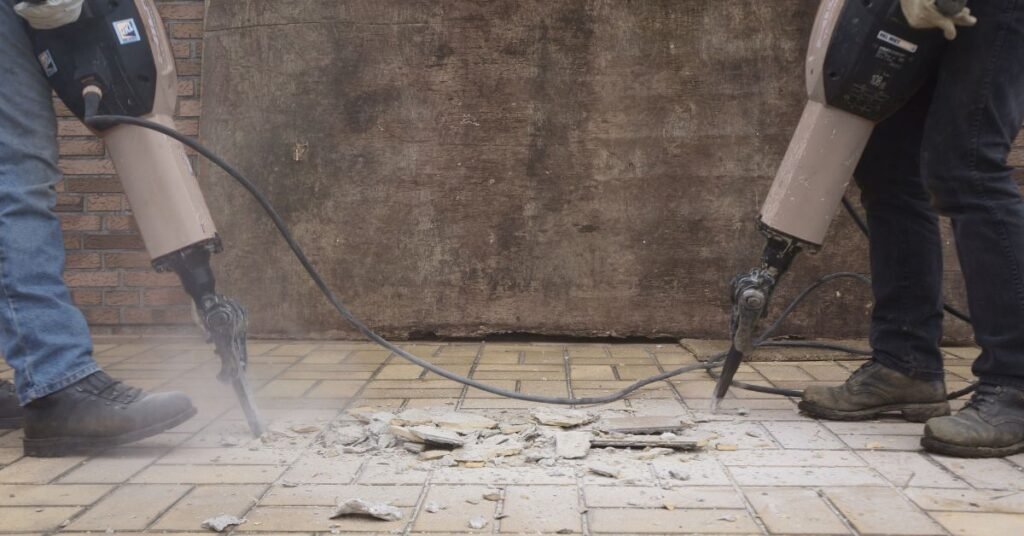
Demolition power tools are essential for successful dismantling projects. Jackhammers break tough surfaces, while saws offer versatility in cutting various materials. Grinders play an important role in preparing surfaces for further work. Understanding the types and applications of these tools can greatly impact efficiency and safety in demolition tasks. However, selecting the right equipment requires careful consideration of specific job requirements. What factors should be assessed when choosing the appropriate tool for a demolition project?
Understanding Jackhammers: Types and Uses
Jackhammers are essential demolition tools used primarily for breaking up concrete, asphalt, and other tough surfaces. Their efficiency is greatly enhanced by advanced jackhammer technology, which includes electric, pneumatic, and hydraulic models.
Electric jackhammers are ideal for smaller jobs or indoor use, providing portability and minimal noise. Pneumatic jackhammers, powered by compressed air, are commonly used in large-scale construction projects due to their high power-to-weight ratio and rapid demolition capabilities. Hydraulic jackhammers offer superior force and are often employed in heavy-duty applications, such as road construction or mining.
The efficiency of jackhammers is further optimized by the design of their chisels, which vary in shape and size to suit specific tasks, from breaking to chiseling.
Operators must consider the type of surface and project requirements to select the appropriate jackhammer type, ensuring maximum efficiency and safety during operation.
The Power of Saws in Demolition Projects
In the domain of demolition, saws play a pivotal role in cutting through various materials, including wood, metal, and concrete. The effectiveness of these tools largely depends on the selection of appropriate saw blade types and cutting techniques. Different blades are designed for specific tasks, enhancing efficiency and precision in demolition projects.
| Saw Blade Type | Ideal Applications |
|---|---|
| Carbide Tipped | Wood, Soft Metals |
| Diamond Blades | Concrete, Masonry |
| Bi-Metal Blades | Ferrous and Non-Ferrous Metals |
| High-Speed Steel | General Purpose Cutting |
| Abrasive Blades | Tile, Stone, Hard Materials |
Utilizing the correct blade in conjunction with effective cutting techniques, such as plunge cutting or scoring, can greatly improve the speed and quality of demolition work, ensuring safe and efficient material removal.
Grinders: Essential Tools for Surface Preparation
Grinders serve as indispensable tools in the domain of surface preparation, enabling professionals to achieve smooth and even surfaces prior to further construction or finishing work. Various grinder types, including angle grinders, bench grinders, and floor grinders, cater to specific applications and materials.
Angle grinders are versatile, commonly used for cutting and grinding metal, while bench grinders are ideal for sharpening tools and deburring. Floor grinders excel in polishing concrete and removing coatings, ensuring optimal surface finishes.
The effectiveness of each grinder type lies in its ability to utilize different abrasive wheels and pads, allowing for tailored surface preparation. For example, diamond blades may be employed for hard materials, whereas finer grit pads are suited for achieving a polished look.
Safety Tips for Using Demolition Power Tools
When utilizing demolition power tools, adherence to safety protocols is paramount to prevent injuries.
The use of personal protective equipment (PPE), such as hard hats, goggles, and gloves, is essential for safeguarding against potential hazards.
Additionally, proper tool handling techniques must be observed to guarantee effective operation and minimize risk during demolition activities.
Personal Protective Equipment
Effective use of demolition power tools necessitates the consistent application of personal protective equipment (PPE) to mitigate the inherent risks associated with such activities. Adhering to established safety standards is critical for ensuring worker safety.
Essential protective gear includes safety goggles to shield the eyes from flying debris, ear protection to guard against noise exposure, and gloves to protect the hands from sharp materials and vibrations. Hard hats are recommended to prevent head injuries from falling objects, while steel-toed boots provide foot protection against heavy equipment.
Respirators may also be necessary in environments with dust or hazardous materials. By utilizing appropriate PPE, individuals can considerably reduce the likelihood of injury during demolition tasks, thereby promoting a safer working environment.
Proper Tool Handling
Utilizing demolition power tools demands a thorough understanding of proper handling techniques to guarantee safety and efficiency.
Effective tool ergonomics plays a critical role in minimizing strain and maximizing control during operation. Users should maintain a firm grip and make certain their stance is stable to prevent accidents.
Extensive user training is essential; operators must be well-versed in each tool’s specific functions and safety features. Regular inspections of tools for wear and damage can prevent malfunctions during use.
Additionally, it is crucial to maintain a clean work area, free from obstacles that could lead to slips or falls.
Choosing the Right Jackhammer for Your Job
Selecting the appropriate jackhammer requires an understanding of various types available, each designed for specific demolition tasks.
Factors such as power output and weight greatly influence performance and operator fatigue, making these considerations vital.
Additionally, application-specific features, such as vibration control and bit compatibility, further impact efficiency and effectiveness in achieving desired results.
Jackhammer Types Overview
A variety of jackhammer types are available, each designed for specific demolition tasks and material conditions.
Hydraulic jackhammers are particularly powerful, relying on pressurized hydraulic fluid to deliver significant force, making them suitable for heavy-duty applications like breaking up concrete and asphalt. They typically require a compressor or hydraulic power source and are favored in large-scale construction and demolition projects.
In contrast, electric jackhammers are more portable and user-friendly, operating on standard electrical power. These tools are ideal for lighter tasks, such as removing tiles or breaking up small concrete surfaces.
When selecting a jackhammer, it is crucial to contemplate the material being worked on and the scale of the job to guarantee peak performance.
Power and Weight Considerations
When choosing the right jackhammer for a demolition job, understanding the interplay between power and weight is vital for peak performance and user safety.
The power requirements of a jackhammer are typically measured in joules or foot-pounds, which indicate its ability to break through concrete or asphalt. Heavier models generally offer greater power, but excessive weight can lead to user fatigue and decreased control.
As a result, ideal weight distribution becomes significant; a well-balanced jackhammer minimizes strain on the operator while maximizing effectiveness. Users should assess the scale of the project and select a jackhammer that meets specific power needs without compromising maneuverability.
This balance guarantees efficient demolition while safeguarding the operator’s physical well-being during extended use.
Application-Specific Features
Understanding the specific requirements of a demolition project is essential for choosing the right jackhammer, as various applications demand distinct features for ideal performance. Implementing effective tool selection strategies involves a thorough examination of features such as impact energy, weight, and operational mode.
| Application | Recommended Jackhammer Type |
|---|---|
| Concrete Chipping | Pneumatic Jackhammer |
| Road Repair | Electric Demolition Hammer |
| Tile Removal | Lightweight Breaker |
| Foundation Work | Hydraulic Jackhammer |
Feature comparisons among different models help in identifying the most suitable option for each task. By evaluating these application-specific features, operators can enhance efficiency and guarantee safety, ultimately leading to successful demolition outcomes.
Comparing Different Types of Saws for Demolition
Numerous saw types play an essential role in demolition projects, each designed for specific cutting tasks and materials. Among the most common are reciprocating saws, circular saws, and band saws.
Reciprocating saws excel in cutting through wood, metal, and drywall, utilizing various blade materials such as high-speed steel and carbide-tipped blades for enhanced durability.
Circular saws, known for their versatility, can cut through thick materials like concrete and metal, often equipped with diamond blades or abrasive blades for specialized applications.
Band saws, while less common in demolition, offer precision for intricate cuts, using flexible blades made from high-carbon steel or bi-metal materials.
Each saw type brings distinct advantages, with blade materials playing a significant role in performance and longevity. Understanding these differences is vital for selecting the right tool for specific demolition tasks, ensuring efficiency and safety on the job site.
Maintenance and Care for Demolition Power Tools
Although the effectiveness of demolition power tools greatly depends on their design and intended use, proper maintenance and care are essential for ensuring longevity and ideal performance.
Regular routine inspections should be conducted to identify wear and tear, including checking for loose screws, worn blades, and damaged cords. Tools should be cleaned after each use to prevent the accumulation of debris and grime, which can impede functionality.
Proper tool storage is equally important; tools should be stored in a dry, secure environment to avoid rust and accidental damage. Using protective cases or racks can further enhance the lifespan of these tools.
Additionally, lubricating moving parts as recommended by the manufacturer can prevent friction-related wear.
Frequently Asked Questions
What Is the Average Lifespan of a Jackhammer?
The average lifespan of a jackhammer varies considerably based on factors such as maintenance and the type of jackhammer used.
Typically, well-maintained electric or pneumatic jackhammers can last between 10 to 15 years. Regular jackhammer maintenance, including inspections and proper lubrication, is essential for longevity.
Additionally, the specific jackhammer types, such as those designed for heavy-duty use, may experience different wear rates, impacting their overall durability and performance.
Can I Rent Demolition Power Tools Instead of Buying Them?
In a bustling city, a contractor opted for tool rental instead of purchasing expensive equipment, illustrating the wisdom of temporary solutions.
The cost comparison of renting versus buying can be significant, especially for short-term projects. Renting allows access to high-quality tools without the burden of ownership, ensuring flexibility and financial efficiency.
This approach not only saves money but also minimizes storage issues, making tool rental an attractive option for many professionals and DIY enthusiasts alike.
What Protective Gear Is Essential for Using These Tools?
When utilizing powerful tools, the importance of protective gear cannot be overstated.
Essential items include protective gloves, which safeguard the hands from cuts, abrasions, and vibrations, enhancing grip and control.
Additionally, safety goggles are vital for protecting the eyes from flying debris, dust, and potential chemical splashes.
Wearing these items greatly reduces the risk of injury, allowing operators to focus on their tasks with greater confidence and safety in hazardous environments.
How Do I Dispose of Debris After Demolition?
After a storm uproots a tree, the remnants must be cleared and repurposed.
Similarly, effective debris disposal after demolition involves various methods, including debris recycling. Homeowners can choose to transport materials to recycling centers, which often accept concrete, metals, and other salvaged items.
Alternatively, local waste management services may provide disposal options. Understanding these disposal methods guarantees compliance with regulations while promoting sustainability in construction practices.
Are Electric or Gas-Powered Tools Better for Demolition Work?
When evaluating whether electric or gas-powered tools are superior for demolition work, one must consider the electric advantages, such as lower noise levels, reduced emissions, and the absence of fuel dependency.
These factors enhance user comfort and environmental compliance.
Conversely, gas-powered tools often present drawbacks, including increased weight, higher operational costs, and the need for regular maintenance.
Ultimately, the choice depends on the specific demands of the demolition task and the user’s preferences.