Demolition saws are essential tools in the construction and renovation sectors. They come in three main types: concrete saws, wall saws, and ring saws. Each type serves distinct purposes, offering various features tailored for specific tasks. Understanding these differences is imperative for peak performance and safety in demolition projects. The selection process, however, can be complex, prompting a closer examination of their functionalities and applications. What further insights can enhance the effectiveness of these tools?
Demolition saws are specialized power tools designed for cutting through a variety of materials encountered in demolition and renovation projects. These saws are essential for implementing effective demolition techniques, enabling operators to efficiently remove concrete, masonry, and other structural components.
Equipped with robust blades, demolition saws are engineered to withstand the demands of rigorous cutting tasks, ensuring precision and durability.
Saw safety is paramount when using these tools. Operators must adhere to strict safety protocols, including wearing appropriate personal protective equipment (PPE) such as gloves, eye protection, and hearing protection.
Additionally, understanding the operational guidelines of each saw type is critical for preventing accidents and ensuring peak performance. Regular maintenance checks and blade inspections are also important in minimizing risks associated with equipment malfunction.
The category of demolition saws encompasses various types, each designed for specific applications and materials.
Concrete saws are primarily utilized for cutting through hard surfaces, while wall saws offer unique features for vertical and horizontal cuts in concrete walls.
Additionally, ring saws serve specialized applications, allowing for precise cutting in confined spaces.
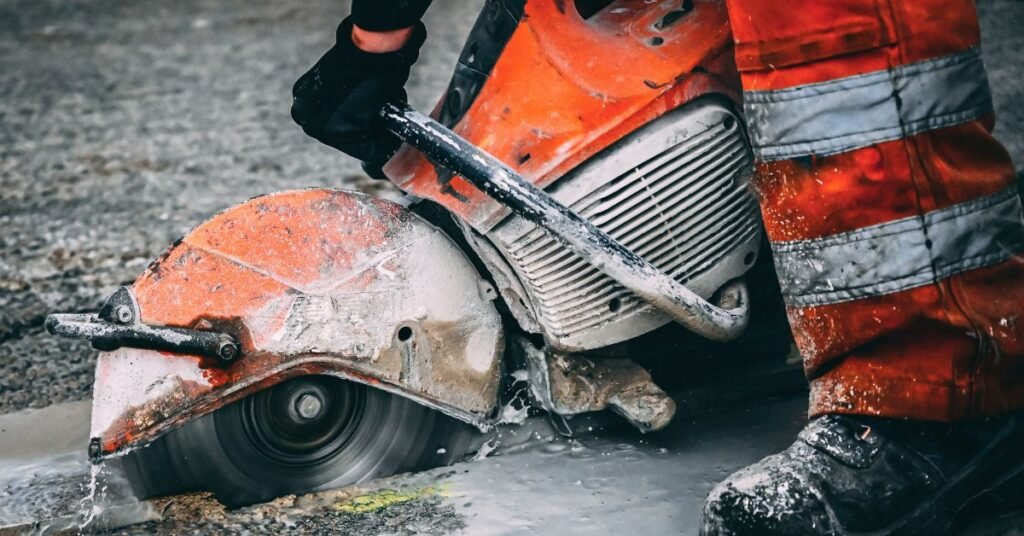
Concrete saws are essential tools in the demolition industry, designed specifically for cutting through various types of concrete and masonry materials.
These saws employ diverse cutting techniques, including wet and dry cutting, to maximize efficiency and minimize dust. Depending on the application, concrete saws utilize different blade materials such as diamond, carbide, or high-speed steel, each offering unique advantages regarding durability and cutting speed.
For instance, diamond blades are preferred for their longevity and ability to cut through reinforced concrete.
Understanding the various types of concrete saws and their respective blade materials is vital for professionals seeking the best performance and precision in demolition tasks, ensuring that the right tools are employed for specific project requirements.
Wall saws are specialized tools designed for precise cutting in vertical surfaces, offering unique features that enhance their performance in various demolition applications. Their functionality allows for straight, accurate cuts in reinforced concrete, brick, and masonry.
| Feature | Description |
|---|---|
| Blade Size | Available in various diameters for different tasks |
| Power Options | Electric and hydraulic models for flexibility |
| Depth of Cut | Capable of cutting depths up to 24 inches |
| Mounting Systems | Wall-mounted or handheld options for versatility |
The advantages of wall saws include reduced vibration, improved safety, and the ability to make deep cuts without compromising structural integrity. These features make wall saws essential tools in the demolition industry, optimizing performance and efficiency.
Numerous applications exist for ring saws in the demolition industry, showcasing their versatility and effectiveness in various cutting scenarios.
These specialized tools are particularly valued for their precision and ability to navigate tight spaces.
Key applications include:
Despite their advantages, such as portability and precision, ring saws have limitations, including decreased cutting depth compared to larger saws and potential for blade wear in tough materials.
Concrete saws are vital tools in the demolition and construction industries, designed specifically for cutting through concrete and masonry materials.
This section will explore various types of concrete saws, highlighting their key features and the common applications for which they are employed.
Understanding these elements is essential for selecting the appropriate saw for specific tasks and ensuring peak performance.
When selecting the appropriate tool for cutting through hard surfaces, understanding the various types of concrete saws is essential.
Each saw type employs different saw blade types and cutting techniques, tailored for specific applications.
Handheld Concrete Saws: Ideal for small jobs, offering portability and precision on vertical surfaces.
Walk-Behind Concrete Saws: Suitable for larger projects, these saws provide stability and deeper cuts for expansive surfaces.
Wall Saws: Designed for cutting walls, they use diamond blades for precise, straight cuts in confined spaces.
Ring Saws: Featuring a circular blade, these are effective for intricate cuts and tight corners, often used in renovation tasks.
Understanding these types allows professionals to choose the right saw for maximum performance and efficiency.
The effectiveness of concrete saws is largely determined by their key features, which influence their performance and suitability for various applications.
One essential aspect is the saw materials, which can include diamond blades for enhanced durability and cutting efficiency. The design and power of the motor also play significant roles, affecting the saw’s ability to handle tough materials during demolition techniques.
Additionally, the weight and ergonomics of the saw contribute to user comfort and precision, especially in prolonged use. Features like adjustable cutting depths and blade guards enhance safety and versatility.
Ultimately, understanding these specifications allows users to select the appropriate concrete saw for specific demolition tasks, ensuring ideal results and efficiency.
Understanding the key features of concrete saws lays the groundwork for recognizing their diverse applications in demolition projects. These specialized tools are integral to various demolition techniques, enabling precise cutting and efficient material removal.
Effective project planning incorporates concrete saws for tasks that require accuracy and speed. Common applications include:
Utilizing concrete saws enhances the effectiveness of demolition techniques, ensuring that projects are completed safely and on schedule. Their versatility makes them indispensable in modern construction and demolition operations.
A variety of wall saws are utilized in construction and demolition projects for their ability to deliver precise cuts in concrete, brick, and masonry. These specialized tools employ diamond blades that provide exceptional cutting techniques, ensuring smooth and accurate results vital for wall applications.
Wall saws are particularly effective for creating openings for doors, windows, and ventilation systems, as they minimize damage to surrounding structures.
The operation of wall saws involves a track-mounted system, allowing for controlled movement and uniform depth of cut. This feature is essential when working with reinforced concrete, as it reduces the risk of unintended structural compromise.
Additionally, wall saws can be powered by either electric or hydraulic systems, offering versatility in various job site conditions. By using advanced wall saw technology, contractors can achieve clean, precise cuts that enhance the overall quality and safety of construction and demolition projects.
While many tools are available for demolition tasks, ring saws stand out for their remarkable versatility and efficiency.
These powerful tools are particularly valued for their ability to execute a variety of cutting tasks with precision and speed.
The ring saw advantages include:
Selecting the right demolition saw involves evaluating several key features that influence performance and efficiency. One critical aspect is the power source; options include electric, gas, or hydraulic, each affecting mobility and cutting capability.
Blade size and type also notably impact cutting depth and material compatibility, with options tailored for concrete, masonry, or metal.
Demolition safety is paramount; consequently, features such as blade guards, vibration dampening, and ergonomic designs should not be overlooked. The weight and balance of the saw can also affect user control and fatigue during extended use.
Additionally, ease of saw maintenance is essential for longevity and reliable performance. Models that offer tool-free blade changes and accessible components for routine checks can simplify upkeep.
Guaranteeing safety when operating demolition saws is critical, as improper use can lead to serious injuries. Adhering to best practices is essential for both operator and bystander protection.
Wear Personal Protective Equipment (PPE): Always don safety goggles, gloves, hard hats, and hearing protection to mitigate risks from debris and noise.
Inspect Saw Blade Before Use: Regularly check for signs of wear, damage, or cracks on the saw blade to maintain peak saw blade safety.
Secure Work Area: Ensure the worksite is clear of obstacles and bystanders to prevent accidents and allow for safe maneuvering.
Follow Manufacturer Guidelines: Always refer to the manufacturer’s instructions for specific operational procedures and maintenance recommendations, guaranteeing the saw is used appropriately.
How does one determine the most suitable blade for a demolition project? The selection process involves evaluating both blade materials and blade sizes in relation to the specific materials being cut.
For instance, diamond blades are ideal for cutting concrete due to their durability and efficiency, while carbide-tipped blades excel in cutting through wood and metal.
Blade sizes also play an essential role; larger blades can increase cutting depth and speed, making them perfect for heavy-duty demolition tasks. Conversely, smaller blades provide greater maneuverability for precision work in confined spaces.
Understanding the project requirements, including the material composition and desired cutting depth, allows operators to select the appropriate blade.
Maintenance and care for demolition saws are critical to guarantee peak performance and longevity.
This includes regular blade inspection to identify wear, proper lubrication techniques to reduce friction, and thorough cleaning after use to prevent debris accumulation.
Adhering to these practices will enhance the efficiency and safety of the equipment.
Regular blade inspection is essential for the best performance and longevity of demolition saws, as neglecting this step can lead to inefficient cutting and increased safety risks.
To guarantee peak blade longevity, operators should adhere to an appropriate inspection frequency. The following checklist can guide the inspection process:
Regular adherence to these inspection practices will not only enhance performance but also contribute to overall safety in demolition operations.
Proper lubrication is vital for the ideal performance and longevity of demolition saws. The lubrication importance cannot be overstated, as it minimizes friction between moving parts, reduces wear, and enhances operational efficiency.
Effective lubrication techniques involve using manufacturer-recommended oils or greases, applied at specified intervals. Operators should inspect the saw’s lubrication system regularly, making sure that all components are adequately lubricated.
Utilizing a brush or spray applicator can guarantee even distribution of lubricant, particularly in hard-to-reach areas. Additionally, it is essential to monitor the lubricant’s condition, replacing it if contaminated or degraded.
Following these lubrication techniques will not only extend the lifespan of the saw but also maintain its cutting performance, ensuring the best results during demolition tasks.
Although cleaning after use may seem like a minor task, it plays an essential role in the overall maintenance and longevity of demolition saws. Implementing effective cleaning techniques contributes considerably to post-use maintenance, ensuring peak performance.
Remove debris: Clear any dust or concrete residue from the saw body and blade.
Inspect components: Examine the blade, filters, and air intakes for wear or damage.
Wash non-electrical parts: Use a damp cloth to clean non-electrical components, avoiding excess moisture.
Store properly: Place the saw in a dry environment, ensuring it is protected from moisture and contaminants.
Regular adherence to these cleaning practices can enhance the efficiency and lifespan of demolition saws, minimizing the risk of operational issues.
When selecting a demolition saw, understanding the leading brands and their respective models can greatly impact the efficiency and effectiveness of the task at hand. Top brands such as Husqvarna, Makita, and Stihl dominate the market due to their innovative technology and reliable performance.
Husqvarna’s K 970 is a popular model known for its powerful engine and durability, making it ideal for heavy-duty applications.
Makita’s EK6101, a lightweight option, offers excellent maneuverability while maintaining cutting precision.
Stihl’s TS 420 is favored for its balance and ergonomic design, which enhances user comfort during prolonged use.
Other notable brands include DeWalt and Milwaukee, which provide competitive models like the DeWalt DWC860W and Milwaukee 2737-20, respectively.
These models reflect the ongoing advancements in demolition saw technology, ensuring professionals can choose the most suitable equipment for their specific needs.
Transporting a demolition saw requires careful consideration for safety.
Key saw transportation tips include making sure the saw is powered off and cool before transport.
It is essential to secure saws using appropriate straps or restraints to prevent movement during transit.
Utilizing a sturdy transport case can enhance protection from damage.
Additionally, keeping the blade covered and avoiding stacking heavy items on top can further guarantee a safe and secure transport process.
Demolition saws are primarily designed for cutting through concrete and masonry; however, with the appropriate saw blade, they can effectively cut metal materials.
The coincidence of selecting a specialized metal cutting blade allows for the saw’s versatility. This adaptation enables operators to tackle various projects, ranging from structural modifications to intricate metalwork.
It is vital to guarantee compatibility between the saw and blade to maintain efficiency and safety during operation.
When using a demolition saw, appropriate personal protective equipment (PPE) is essential for ensuring saw safety.
Recommended protective gear includes safety goggles to shield the eyes from debris, hearing protection to mitigate noise exposure, and gloves for hand protection.
Additionally, wearing a dust mask or respirator can help prevent inhalation of harmful particles.
Steel-toed boots provide necessary foot protection, while high-visibility clothing enhances worker visibility in potentially hazardous environments.
Proper PPE is critical for safe operations.
When addressing the disposal of worn-out saw blades, various disposal methods are vital for safety and environmental considerations.
Blade recycling is often the most responsible option, allowing materials to be repurposed rather than sent to landfills. Many metal recycling facilities accept saw blades, guaranteeing proper handling.
Additionally, some manufacturers offer take-back programs for worn blades. It is important to research local regulations and facilities to guarantee compliance and responsible disposal practices.
In the domain of construction, where precision meets power, rental options for demolition saws are widely available.
Contractors often seek such rentals to manage project costs effectively. Rental costs can vary based on the type of saw and rental duration, typically ranging from a few hours to several days.
Rental services provide flexible agreements, allowing users to select the equipment needed without the burden of ownership and maintenance.