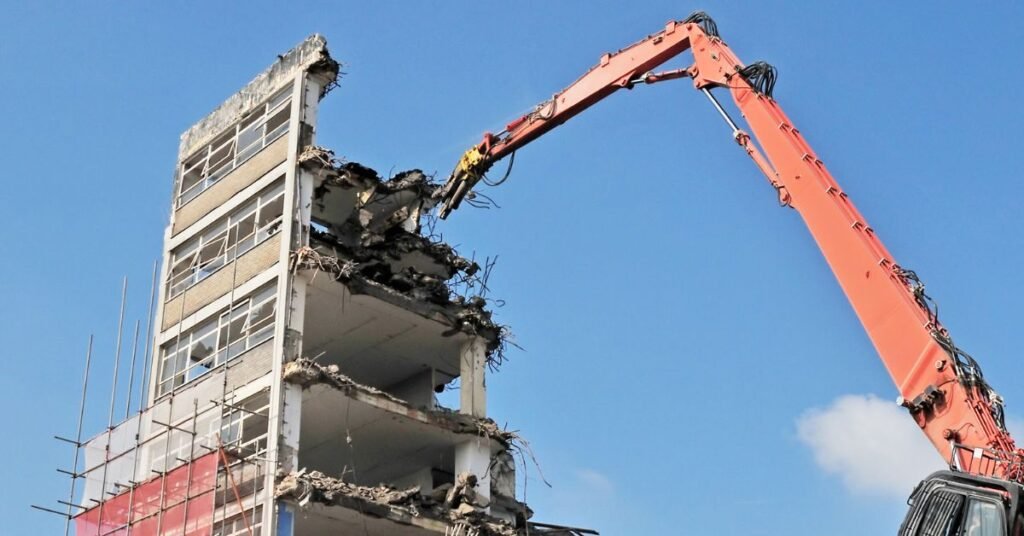
High-reach excavators play a pivotal role in the demolition of tall structures. Their precision and versatility make them indispensable for projects involving skyscrapers, bridges, and industrial facilities. However, the complexities of operating such machinery require strict adherence to safety protocols. Understanding the various types, features, and maintenance requirements is vital for efficient operation. This discussion will outline key uses and critical safety tips that guarantee successful demolition outcomes while minimizing risks.
High-reach excavators are specialized pieces of heavy machinery designed to perform demolition tasks at considerable heights, enhancing operational efficiency and safety. These excavators typically feature a long boom and a variety of attachments, enabling them to tackle high reach applications such as dismantling skyscrapers, bridges, and industrial structures. Their ability to extend beyond the limitations of standard excavators allows for precise dismantling of structures while minimizing the risk of accidents involving workers or surrounding properties.
Engineered with advanced hydraulic systems, high-reach excavators deliver powerful lifting capabilities and guarantee stability during operations. They are often equipped with specialized tools, including shears, grapples, and hydraulic hammers, which facilitate the efficient breakdown of materials. By utilizing high-reach excavators, contractors can considerably reduce the time and labor costs associated with demolition projects, thereby maximizing operational efficiency in challenging environments.
While traditional excavators may struggle with high-altitude demolition tasks, specialized high-reach excavators provide significant advantages in this domain. One of the primary benefits is enhanced demolition efficiency, as these machines can reach heights that standard excavators cannot, enabling operators to dismantle structures safely and effectively from a distance. This capability minimizes the need for scaffolding or additional equipment, streamlining the demolition process.
Moreover, high-reach excavators exhibit impressive equipment versatility, accommodating various attachments such as shears, hammers, and grapples. This adaptability allows operators to tackle a wide range of demolition challenges, from concrete structures to steel frameworks, all while maintaining operational safety. The extended reach reduces the risk of accidents associated with working at heights, protecting both workers and surrounding areas. Overall, high-reach excavators represent a critical advancement in demolition technology, facilitating efficient and safe operations in complex environments.
The design of high-reach excavators incorporates several key features that enhance their performance in demolition tasks. One of the primary key specifications is their extended boom reach, which allows operators to safely dismantle tall structures from a distance, minimizing risk. Additionally, these excavators are equipped with a powerful hydraulic system that facilitates precise control over various attachments, improving operational efficiency.
The use of advanced stabilization systems guarantees the excavator remains balanced during operation, even at significant heights. Many models also feature a modular design, allowing for quick attachment changes based on the specific demolition requirements. Moreover, the integration of state-of-the-art technology, such as telematics, provides real-time data on performance metrics, enabling operators to monitor the machine’s efficiency and productivity. Collectively, these features enable high-reach excavators to perform complex demolition tasks safely and effectively.
Various types of high-reach excavators are designed to meet the specific demands of demolition projects, each featuring unique characteristics suited for different applications. Understanding the operational differences between different models is vital for effective utilization.
Each type presents distinct advantages, making careful selection essential for demolition project success.
When selecting a high-reach excavator for a demolition project, it is imperative to assess the project’s height requirements to guarantee adequate reach. Additionally, compatibility with various attachments is essential for efficient operation and task versatility. Finally, understanding the equipment’s weight limitations is critical for maintaining stability and safety during demolition activities.
Selecting the appropriate high-reach excavator for a demolition project hinges critically on understanding project height requirements. Accurate height assessment is essential to navigate potential demolition challenges effectively. Key considerations include:
Choosing the right attachments for a high-reach excavator is pivotal to maximizing efficiency and effectiveness during demolition projects. Various attachment types, such as grapples, shears, and hammers, serve specific functions and enhance the versatility of the excavator. However, compatibility challenges can arise, particularly concerning hydraulic systems and mounting mechanisms. It is crucial to guarantee that attachments are designed to work seamlessly with the excavator’s specifications, including flow rates and pressure requirements. Additionally, operators should consider the weight and balance of attachments to maintain peak performance. Conducting thorough compatibility assessments will mitigate potential issues and facilitate smooth operation, ultimately leading to successful demolition outcomes. Proper selection of attachments contributes markedly to overall project efficiency and safety.
Understanding equipment weight limitations is essential for guaranteeing that a high-reach excavator can operate effectively within the constraints of a demolition project. Proper assessment of weight capacity influences equipment stability and load distribution, thereby enhancing safety and efficiency. Key factors to evaluate include:
High-reach excavators serve an essential role in the demolition industry, particularly for projects involving tall structures or challenging urban environments. Their ability to extend significant heights makes them indispensable for safely dismantling high-rise buildings, bridges, and other elevated structures. These machines are often employed in conjunction with various demolition techniques, such as selective deconstruction, where specific sections are targeted to minimize debris and guarantee structural stability during the process.
In urban settings, high-reach excavators facilitate controlled demolitions, allowing for precise operations in constrained spaces. Project management teams rely on these machines to adhere to timelines and safety regulations while optimizing efficiency. By utilizing advanced attachments, such as shears or pulverizers, operators can effectively break down materials without compromising surrounding infrastructure. This capability underscores the importance of high-reach excavators in modern demolition practices, enhancing both safety and project execution.
Effective demolition utilizing high-reach excavators requires a strategic approach that emphasizes precision and safety. Employing the right demolition techniques is vital to guarantee successful outcomes while minimizing risks. Thorough operator training is essential to equip personnel with the necessary skills to operate high-reach excavators effectively.
Key techniques include:
A thorough site assessment is critical prior to demolition, as it facilitates the evaluation of structural integrity and the identification of hazardous materials. Understanding the condition of existing structures guarantees that demolition processes are executed safely and efficiently. Additionally, recognizing hazardous materials, such as asbestos or lead, is essential to comply with regulatory standards and protect worker safety.
How can the integrity of a structure be accurately evaluated before demolition? Analyzing structural integrity is essential to guarantee safety and compliance during demolition. A thorough structural examination, coupled with engineering evaluations, identifies potential risks and informs decision-making. Key factors in this evaluation include:
A detailed evaluation minimizes hazards and informs the selection of appropriate demolition methods, guaranteeing a safe and efficient process.
What vital elements must be considered when identifying hazardous materials prior to demolition? Effective hazard identification is essential to guarantee material safety and protect workers and the environment. A thorough site assessment should include an evaluation of potential hazardous materials such as asbestos, lead, and polychlorinated biphenyls (PCBs). This involves reviewing historical records, conducting visual inspections, and performing material sampling where necessary. Additionally, it is important to assess the condition of the building, as deteriorating structures may release harmful substances. Engaging certified professionals for testing and analysis can provide an extensive understanding of the risks involved. By prioritizing hazard identification, demolition teams can implement appropriate safety measures and protocols, minimizing exposure and ensuring compliance with regulatory requirements.
While operating high-reach excavators can enhance efficiency in demolition projects, adherence to safety regulations is paramount to protect workers and nearby structures. Effective safety training and thorough operational guidelines are essential components in guaranteeing safe practices during high-reach excavator operations.
Key safety regulations include:
Personal Protective Equipment (PPE) plays a critical role in guaranteeing the safety of operators working with high-reach excavators during demolition activities. Proper PPE selection is essential for mitigating risks associated with falling debris, exposure to hazardous materials, and noise. Operators must be trained not only in equipment handling but also in the appropriate use of PPE to enhance their safety on the job site.
| PPE Item | Purpose |
|---|---|
| Hard Hats | Protects against head injuries |
| Safety Goggles | Shields eyes from debris |
| High-Visibility Vests | Enhances visibility |
| Steel-Toed Boots | Protects feet from heavy objects |
Effective PPE selection, combined with thorough operator training, guarantees that personnel are well-equipped to handle the dangers present in demolition environments. This proactive approach greatly reduces the likelihood of accidents and injuries.
Effective communication on the job site is essential for ensuring safety and operational efficiency, particularly when using high-reach excavators for demolition. Establishing clear communication channels, conducting regular safety meetings, and utilizing visual aids can greatly enhance awareness among team members. These practices help mitigate risks and facilitate a coordinated approach to complex demolition tasks.
How can clear communication channels enhance safety and efficiency on demolition sites? Effective communication is essential for coordinating activities and ensuring that all team members are aware of potential hazards. Utilizing appropriate communication tools facilitates seamless interactions, allowing for timely project updates and immediate feedback.
Key aspects of clear communication include:
Regular safety meetings serve as a critical component in promoting a culture of safety on demolition sites. These meetings provide a structured platform for discussing essential safety protocols, ensuring that all team members are aware of the latest guidelines and procedures. They facilitate effective hazard identification, enabling workers to recognize potential risks associated with high-reach excavators and other machinery used in demolition. Regularly scheduled discussions encourage open communication, allowing employees to voice concerns and share experiences related to safety practices. By fostering a proactive approach to safety, these meetings help to mitigate accidents and enhance overall site safety. Ultimately, the commitment to regular safety meetings reflects an organization’s dedication to maintaining a secure working environment for all personnel involved.
Clear communication is essential on demolition sites, particularly when operating high-reach excavators. The use of visual aids enhances understanding and guarantees safety. Effective presentations incorporating visual elements can greatly improve communication among team members.
Key benefits of utilizing visual aids include:
Implementing these strategies can lead to a well-coordinated demolition process, ultimately improving efficiency and safety on the job site.
A thorough understanding of load limits and stability is crucial for the safe and efficient operation of high-reach excavators in demolition projects. Effective load distribution is critical to guarantee that the excavator maintains its balance while performing tasks at significant heights. Operators must conduct a stability analysis before commencing work, evaluating factors such as the weight of the load, boom extension, and ground conditions.
High-reach excavators have specific load limits defined by the manufacturer, which should not be exceeded to prevent accidents. Additionally, operators should be aware of how dynamic forces, such as wind or vibrations, can impact stability during operation. Regular maintenance checks on the excavator’s hydraulic systems and structural components also play a key role in maintaining load limits and stability. By adhering to these guidelines, demolition teams can mitigate risks and enhance the overall safety of high-reach excavator operations.
While high-reach excavators are designed for demanding demolition tasks, the implementation of well-defined emergency procedures and contingency plans is essential for addressing unforeseen circumstances. Organizations must prioritize safety by conducting regular emergency drills and ensuring that all personnel are familiar with protocols. Effective contingency planning enables teams to respond swiftly and appropriately to incidents, minimizing risks.
Key components of an effective emergency procedure include:
Regular maintenance is vital for the best performance of high-reach excavators. This includes systematic inspection procedures to identify any wear or damage, as well as routine checks of fluid levels to guarantee proper operation. Adhering to these maintenance tips can greatly extend the lifespan and efficiency of the equipment.
Guaranteeing the ideal performance and safety of high-reach excavators necessitates a systematic approach to regular inspection procedures. Adhering to established inspection frequency and checklist procedures is crucial for peak functionality. This process not only enhances safety but also prolongs equipment lifespan.
Key inspection elements include:
Regular adherence to these procedures guarantees the efficiency and reliability of high-reach excavators.
Fluid level checks are essential for maintaining the operational efficiency of high-reach excavators, as inadequate fluid levels can lead to premature wear and potential equipment failure. Regular monitoring of hydraulic fluid levels is vital, as it directly affects the machine’s performance and longevity. Utilizing advanced fluid monitoring systems can streamline this process, providing real-time data and alerts for low fluid levels. Operators should adhere to recommended hydraulic fluid maintenance practices, including checking for leaks, ensuring proper filtration, and replacing fluids as specified by the manufacturer. Additionally, maintaining clean fluid reservoirs prevents contaminants from compromising hydraulic systems. Consistent attention to fluid levels not only enhances safety but also optimizes the overall functionality of high-reach excavators in demolition applications.
Although high-reach excavators are powerful tools for demolition, the safe and effective operation of these machines hinges on proper training and certification for operators. Certification programs are essential to guarantee that operators develop the necessary skills to manage these complex machines safely. Such training focuses on various vital aspects, including:
Operators equipped with thorough training can greatly reduce the likelihood of accidents and enhance productivity on job sites. Certification not only validates an operator’s expertise but also fosters a culture of safety and compliance within the demolition industry. Consequently, investing in quality training and certification programs is indispensable for anyone looking to operate high-reach excavators effectively and safely.