
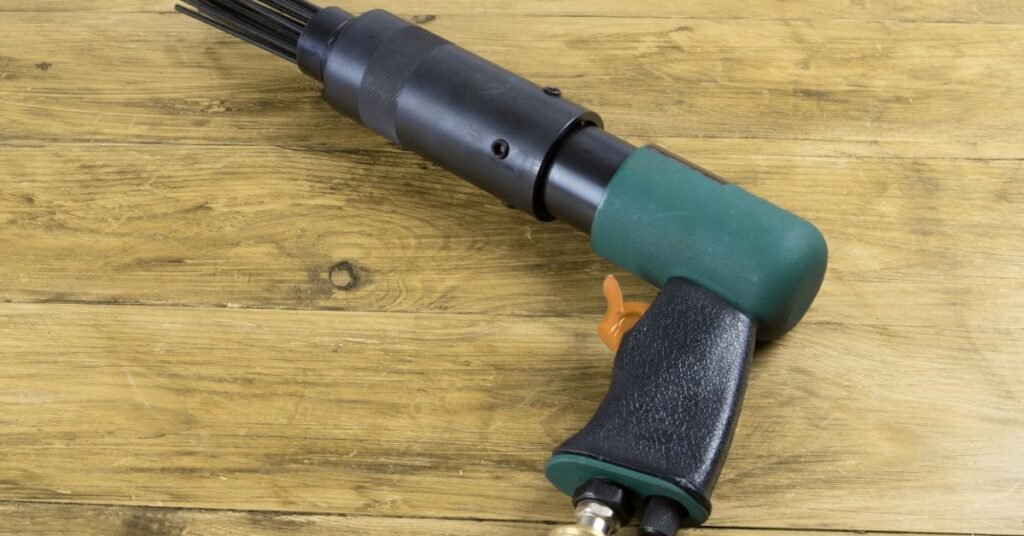
Needle scalers are specialized tools designed for surface preparation and concrete removal. They operate using high-frequency vibrations to dislodge unwanted materials like rust and paint. With precision configurations, these tools effectively clean surfaces without causing damage. Their applications span various industries, emphasizing their importance in maintaining surface integrity. Understanding the mechanics and benefits of needle scalers can greatly influence project efficiency and outcomes. What factors should one consider when selecting the right needle scaler?
A needle scaler is a specialized pneumatic or electric tool designed for surface preparation and the removal of coatings from various materials, primarily concrete and metal. The device operates by utilizing a series of rapidly vibrating needles, which penetrate and dislodge material from surfaces.
Needle scaler types vary, including handheld models for small, detailed tasks and larger, more powerful versions for extensive surface areas. Each type is equipped with different needle configurations to suit specific applications.
The benefits of using a needle scaler are substantial. It allows for efficient removal of rust, paint, and other contaminants, greatly reducing manual labor and time spent on surface preparation.
Furthermore, the tool minimizes damage to the underlying material, preserving structural integrity. Additionally, needle scalers are versatile, adaptable to various surfaces and coatings, making them an indispensable asset in construction and maintenance tasks.
Needle scalers operate through a mechanism that utilizes rapid, high-frequency vibrations to drive multiple needles against a surface, effectively removing contaminants and preparing it for further treatment.
This technology is widely applied in various industries, including construction and manufacturing, for tasks such as concrete removal and surface cleaning.
Understanding the underlying principles of needle scalers enhances their effectiveness in specific applications and optimizes operational efficiency.
Utilizing high-frequency vibrations, needle scalers effectively dislodge material from surfaces, making them ideal for tasks such as surface preparation and concrete removal. The mechanism of action relies on the rapid oscillation of needles, which penetrate and disrupt the bond between the surface and the material. This process enhances mechanical efficiency while promoting vibration reduction, allowing for more controlled operation.
| Feature | Benefit | Importance |
|---|---|---|
| High-frequency Oscillation | Efficient Material Removal | Faster Surface Prep |
| Adjustable Pressure | Versatile Applications | Tailored Performance |
| Lightweight Design | Easy Maneuverability | Reduced Operator Fatigue |
| Durable Construction | Longevity | Cost-Effectiveness |
This combination of features guarantees ideal performance in various applications.
In various industrial settings, needle scalers play an essential role in surface preparation and concrete removal tasks. Their design allows for efficient removal of rust, paint, and other contaminants, making them invaluable in industries such as construction, manufacturing, and shipbuilding.
The needle scaler versatility enables operators to tackle diverse surfaces, including metal, concrete, and wood, adapting to different project requirements. By utilizing high-frequency impact, these tools effectively dislodge materials without damaging the underlying substrate, ensuring a clean and prepared surface for subsequent treatments.
Additionally, needle scalers are effective in confined spaces, enhancing their applicability in maintenance and repair operations. Overall, their efficiency and adaptability underscore the significance of needle scalers in various industrial applications.
Needle scalers incorporate several key features that enhance their effectiveness in surface preparation and concrete removal.
High-power air pressure enables efficient material removal, while precision needle configurations guarantee targeted application for various surfaces.
Additionally, a lightweight ergonomic design facilitates ease of use and reduces operator fatigue during extended tasks.
Air-powered tools are renowned for their efficiency, and needle scalers exemplify this with their high-power air pressure capabilities.
These tools leverage high pressure efficiency to optimize surface preparation and concrete removal tasks. The air flow dynamics within needle scalers are engineered to maximize the impact force of the needles, enabling effective removal of coatings, rust, and other surface contaminants.
By utilizing compressed air, needle scalers deliver consistent performance, ensuring that operators can achieve desired results with minimal effort. The high-pressure output allows for rapid work completion and reduces operator fatigue, making them an essential choice for demanding applications.
Consequently, the design of needle scalers plays a critical role in their effectiveness and user satisfaction in various industrial settings.
The configuration of precision needles is a critical feature that enhances the performance of needle scalers. The effectiveness of these tools largely depends on needle selection, which influences the depth and breadth of surface material removal.
Precision adjustment capabilities allow users to modify the needle arrangement to suit specific tasks, ensuring ideal contact with the surface being treated. This adaptability not only improves efficiency but also extends the tool’s versatility across various applications, from light surface preparation to heavy-duty concrete removal.
Additionally, the precise alignment of needles minimizes vibration and maximizes impact force, resulting in a more controlled and effective operation. Overall, precision needle configuration is essential for achieving high-quality results in surface preparation and concrete removal tasks.
A lightweight ergonomic design greatly enhances the usability and efficiency of needle scalers.
These tools are constructed using lightweight materials, which considerably reduce operator fatigue during prolonged use.
The ergonomic benefits of this design include a balanced weight distribution and comfortable grip, allowing for improved handling and maneuverability. Users can maintain precision and control, even in challenging work environments.
Additionally, the reduced weight minimizes strain on the wrist and shoulder, promoting better posture and reducing the risk of repetitive strain injuries.
Although various tools exist for surface preparation and concrete removal, needle scalers offer distinct advantages that enhance efficiency and effectiveness in these processes. One primary benefit is their ability to remove rust, paint, and other contaminants from surfaces quickly, promoting improved adhesion for subsequent treatments. Additionally, needle scalers provide precision in removing material without damaging the underlying substrate, a critical factor in many applications.
| Needle Scalier Advantages | Impact on Efficiency |
|---|---|
| High material removal rate | Reduces labor time and costs |
| Precise surface preparation | Enhances adhesion quality |
| Lightweight and ergonomic | Minimizes operator fatigue |
| Versatile for various surfaces | Adaptive to multiple applications |
| Low maintenance requirements | Increases tool uptime |
These needle scaler advantages contribute greatly to needle scaler efficiency, making them an indispensable tool for professionals in surface preparation and concrete removal.
Needle scalers are widely employed in various applications for surface preparation due to their efficiency and precision. These tools are particularly effective in removing rust, old paint, and contaminants from metal surfaces, thereby enhancing surface effectiveness.
By utilizing rapid, high-frequency impacts, needle scalers create a clean, textured surface ideal for subsequent coatings or treatments.
In concrete applications, needle scalers contribute considerably to texture improvement, ensuring better adhesion for sealants, paints, or overlays. The action of the needles creates micro-textures that increase the bonding surface area, which is critical for long-lasting results.
Additionally, needle scalers can be utilized in preparation for welding, as they remove impurities and prepare the metal for peak fusion.
Concrete removal techniques encompass a variety of methods tailored to efficiently eliminate concrete surfaces while minimizing damage to surrounding materials.
Each technique employs specific concrete demolition techniques and effective chiseling methods suited to the task at hand.
Hydraulic Breakers: Utilize high-pressure hydraulics to fracture concrete, ideal for large-scale projects.
Diamond Wire Saws: Employ diamond-embedded wire for precise cuts, suitable for intricate shapes and depths.
Chipping Hammers: Handheld tools that deliver rapid impacts, effective for small-scale removal and detailed work.
Needle Scalers: Use high-frequency vibrations to remove surface layers without damaging the underlying material, perfect for delicate applications.
These methods provide a thorough approach, ensuring efficient concrete removal tailored to specific project requirements while maintaining the integrity of adjacent surfaces.
Safety is paramount when utilizing needle scalers, as improper use can lead to serious injuries. To mitigate risks, operators must prioritize personal protective equipment (PPE) selection.
Essential PPE includes safety goggles to protect the eyes from flying debris, ear protection to guard against excessive noise, and respirators to prevent inhalation of harmful dust particles. In addition, gloves should be worn to shield hands from sharp edges and vibrations.
Proper equipment selection is also critical; ensuring that the needle scaler is appropriate for the task and is in good working condition can greatly reduce hazards. Operators should receive adequate training to understand the equipment’s operation and potential risks involved.
Moreover, maintaining a clean workspace helps to prevent slips and falls. By adhering to these safety precautions, individuals can enhance their protection while effectively using needle scalers for surface preparation and concrete removal tasks.
Selecting the appropriate needle scaler for a project requires a thorough understanding of the various types available and their respective applications.
Key features, such as power source, needle configuration, and weight, play an essential role in determining the most effective tool for specific tasks.
An informed choice can greatly enhance efficiency and results in surface preparation and concrete removal.
Needle scalers are essential tools for effective surface preparation and concrete removal, offering a variety of types suited to different applications.
Understanding the various needle scaler types allows for informed decisions based on project requirements. Here are four primary types:
Pneumatic Needle Scalers: Utilize compressed air for powerful performance; ideal for heavy-duty tasks.
Electric Needle Scalers: Operate on electricity, offering mobility and ease of use; suitable for light to moderate work.
Hydraulic Needle Scalers: Employ hydraulic power, providing exceptional force and durability for tough surfaces.
Battery-Powered Needle Scalers: Offer portability without cords, perfect for remote locations and quick jobs.
When evaluating options for a needle scaler, several key features must be taken into account to secure ideal performance for specific project requirements.
First, consider the needle scaler types available, such as pneumatic or electric models, each offering distinct advantages. Pneumatic scalers typically provide higher power and efficiency, making them suitable for heavy-duty tasks, while electric scalers offer portability and ease of use for lighter applications.
Additionally, the needle diameter and length influence the scaler’s effectiveness in reaching tight spots and removing various materials. The scalers’ weight and vibration control are also essential for user comfort during prolonged use.
Ultimately, understanding these features guarantees that the selected needle scaler maximizes its benefits, including enhanced productivity and improved surface preparation.
Proper maintenance of needle scalers is essential for guaranteeing peak performance and extending their lifespan. Regular attention to these tools can prevent premature wear and enhance efficiency.
Effective needle scaler maintenance involves several key practices, which can be summarized in the following scaler care tips:
Clean the Tool: After each use, remove debris and dust from the scalers to prevent clogging and damage.
Lubricate Moving Parts: Regularly apply appropriate lubricants to the moving components to guarantee smooth operation and reduce friction.
Inspect for Wear: Routinely check the needles and other parts for signs of wear or damage, replacing them as necessary to maintain effectiveness.
Store Properly: When not in use, keep the needle scaler in a dry, protected location to avoid rust and environmental damage.
Adhering to these practices will contribute appreciably to the longevity and reliability of needle scalers.
Effective surface preparation and concrete removal are critical steps in construction and renovation projects. To achieve ideal results, operators should utilize the correct needle scaler for the specific task, guaranteeing that the tool’s power and scale size match the surface condition.
Prior to beginning, it is essential to assess the substrate for contaminants such as oil or moisture; these should be addressed to enhance adhesion during concrete restoration. Operators should maintain a consistent speed and angle while applying the needle scaler to avoid surface damage and guarantee uniformity.
Adequate personal protective equipment must be worn to safeguard against airborne particles. Post-removal, thorough cleaning of the area is necessary to prepare for subsequent treatments, such as sealing or resurfacing.
The theory that needle scalers can effectively be utilized on metal surfaces is supported by their design and functionality.
These tools excel in metal surface applications by removing rust, scale, and contaminants efficiently. The benefits of needle scalers include their ability to reach intricate areas and provide a clean finish without damaging the underlying material.
Therefore, they prove to be a valuable asset in various metalworking processes, enhancing surface preparation considerably.
The average lifespan of a needle scaler typically ranges between 5 to 10 years, depending on usage and maintenance practices.
Regular maintenance tips, such as cleaning the tool after each use and guaranteeing proper lubrication, greatly enhance its longevity.
Additionally, operators should periodically check for wear on needles and replace them as needed, as this can impact performance and lifespan.
The noise levels produced by needle scalers during operation are a significant consideration for users. Typically, these tools generate high decibel levels, which can raise operational concerns regarding hearing protection and workplace safety.
Prolonged exposure to such noise may lead to hearing damage, necessitating the use of appropriate protective equipment. It is advisable for operators to assess the sound output and implement measures to mitigate the impact of noise during use.
The operation of specific tools often necessitates specialized training to guarantee effective usage and adherence to safety standards.
In the case of needle scalers, individuals must be acquainted with operational guidelines and safety precautions to mitigate risks associated with their powerful functions.
Proper training equips operators with knowledge about handling techniques, personal protective equipment, and maintenance, ultimately promoting a safer work environment and enhancing the tool’s efficiency during surface preparation tasks.
Needle scalers are designed for effective rust removal and paint stripping. Their high-frequency, rapid strokes allow the pointed needles to dislodge and remove surface contaminants, including rust and layers of paint.
This tool is particularly advantageous in industrial settings where precision and efficiency are paramount. The effectiveness of needle scalers in these applications depends on the condition of the surface and the operator’s technique, ensuring ideal results in surface preparation tasks.