Site preparation and compaction equipment play a critical role in demolition projects. They guarantee both safety and efficiency during the process. Key machinery, such as bulldozers and excavators, facilitate debris removal and surface grading. Meanwhile, compactors and rollers enhance ground stability. Understanding the specifics of each equipment type is essential. This knowledge can greatly impact operational success and minimize risks. However, various factors influence the selection and maintenance of these machines.
Although often overlooked, site preparation is a critical component of the demolition process that greatly influences the efficiency and safety of subsequent operations.
Proper site preparation begins with a thorough site assessment, which evaluates existing structures, environmental factors, and potential hazards. This assessment is essential for identifying the specific ground conditions that may affect demolition activities, such as soil stability, drainage issues, and the presence of underground utilities.
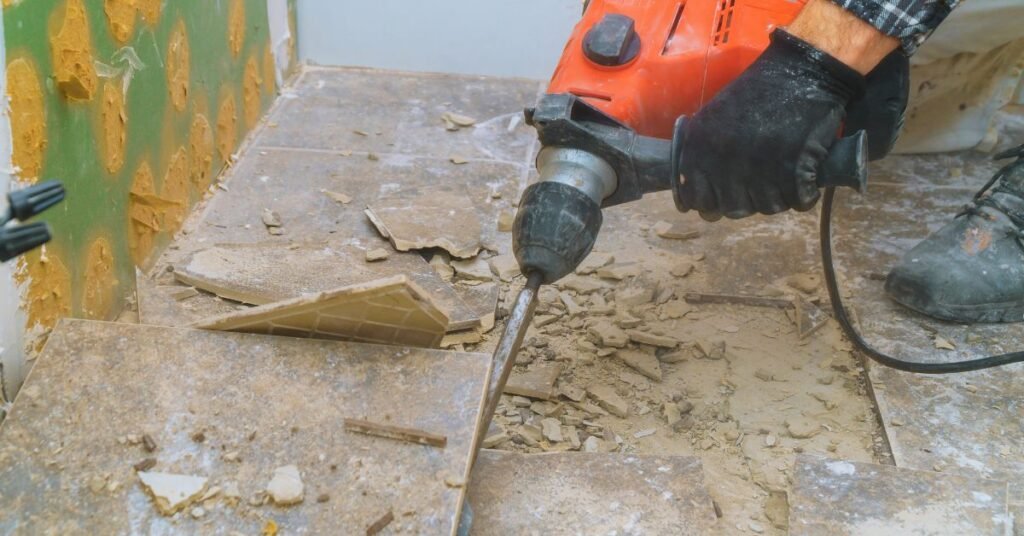
Demolition projects require a variety of specialized equipment designed to efficiently and safely dismantle structures. Key types of demolition equipment include excavators equipped with hydraulic attachments, such as shears and hammers, which enable precise cutting and breaking of materials.
Additionally, wrecking balls and high-reach excavators are utilized for larger structures, employing gravity and mechanical leverage to facilitate demolition techniques.
Innovative equipment, such as robotic demolition machines, has emerged, enhancing safety and precision in hazardous environments. These remote-operated units are particularly useful in tight spaces or where structural integrity is compromised.
Furthermore, advanced dust suppression systems and vibration monitoring technology have improved the safety of demolition operations, minimizing environmental impact and protecting adjacent structures.
The integration of these equipment innovations reflects the industry’s commitment to adopting modern practices, ensuring that demolition projects are executed with greater efficiency and safety.
Bulldozers are essential machines in site preparation for demolition projects, characterized by their powerful engines and robust blade systems.
These features enable them to efficiently clear debris, grade surfaces, and move large quantities of material. Their versatility makes them indispensable on demolition sites, adapting to various tasks such as earthmoving and material handling.
Powerful and versatile, bulldozers serve as essential machines in site preparation for demolition projects. These heavy-duty vehicles are equipped with a broad, flat blade, enabling efficient moving and leveling of soil and debris.
One of the primary bulldozer advantages is their ability to operate in diverse terrains, making them suitable for various site conditions. Different bulldozer types are available, including crawler, wheel, and mini bulldozers, each designed to meet specific operational needs.
Crawler bulldozers provide superior traction and stability on uneven ground, while wheel bulldozers offer enhanced speed and maneuverability on firm surfaces.
Additionally, the incorporation of advanced technology, such as GPS and automated grade control, allows for precise operation, further enhancing their efficiency and effectiveness in site preparation tasks.
In the domain of site preparation, bulldozers play an important role by facilitating various tasks essential to demolition projects. These powerful machines address numerous demolition challenges, including the removal of debris, leveling of ground surfaces, and preparation for new construction.
Equipment innovations have enhanced bulldozer capabilities, such as improved hydraulic systems and advanced blade designs, allowing for increased efficiency and precision in site prep tasks. Their versatility enables operators to adapt to diverse site conditions, ensuring that projects proceed smoothly.
Additionally, bulldozers can be equipped with attachments like rakes and grapples to further assist in clearing materials, demonstrating their integral function in transforming demolition sites into viable areas for future development.
Excavators serve as indispensable tools in the demolition industry, offering a remarkable combination of power and versatility. Their ability to perform a variety of tasks makes them essential for efficient demolition operations.
Equipped with various excavator attachments, such as hydraulic hammers, shears, and grapples, these machines can adapt to different demolition challenges, from dismantling structures to clearing debris.
Excavator versatility extends beyond their attachments; they can operate in confined spaces, making them suitable for urban demolition projects. Additionally, their advanced hydraulic systems allow for precise movements, enhancing safety and operational efficiency.
Operators can quickly switch attachments to tackle specific tasks, reducing downtime and increasing productivity.
Compactors play a critical role in ensuring ground stability during demolition projects by effectively reducing soil voids and increasing density.
Various types of compactors, including plate compactors, roller compactors, and rammer compactors, are employed based on specific site requirements and soil conditions.
Understanding different compaction techniques is essential for maximizing efficiency and achieving desired compaction results.
Various types of compactors play a critical role in achieving ground stability during demolition projects.
These machines guarantee that soil is adequately compressed, preventing future subsidence or instability.
The following are key types of compactors commonly used:
Vibratory Plate Compactor: Ideal for small to medium-sized areas, this machine uses vibrating plates to effectively compact soil and asphalt.
Trench Compactor: Specifically designed for narrow trenches, it efficiently compacts soil in confined spaces, making it essential for utility work.
Roller Compactor: Suitable for larger projects, this heavy equipment is used to compress large areas, providing excellent stability.
Jumping Jack Compactor: Known for its maneuverability, this machine is perfect for tight spots and excels in compacting cohesive soils.
These compactors are crucial for a successful demolition process.
Effective compaction techniques are vital for ensuring ground stability during demolition projects. Various compaction methods, such as vibration, static load, and impact, are employed to achieve ideal soil density. These techniques not only enhance the load-bearing capacity of the ground but also minimize settlement issues that may arise post-demolition.
| Compaction Method | Impact on Soil Density |
|---|---|
| Vibration | Increases density considerably, reducing voids |
| Static Load | Gradually compacts layers, ensuring uniformity |
| Impact | Effective for granular soils, improves cohesion |
| Dynamic | Best for cohesive soils, achieves rapid densification |
| Tamping | Ideal for small areas, enhances surface stability |
Utilizing appropriate compaction techniques is essential for maintaining structural integrity and safety in subsequent construction activities.
While preparing a site for demolition, the use of rollers plays an essential role in achieving smooth and stable surfaces. Proper surface preparation is critical to guarantee safety and efficiency during demolition.
Various roller types are utilized in the compaction process, each serving distinct purposes:
Smooth Drum Rollers: Ideal for compacting granular materials and providing a flat surface.
Padfoot Rollers: Designed for cohesive soils, these help enhance compaction through their specialized drum design.
Combination Rollers: Offering versatility, they can efficiently handle both granular and cohesive materials.
Static Rollers: These are effective for compacting asphalt and other materials that require minimal vibration.
Employing the appropriate roller type not only facilitates effective surface preparation but also contributes to the longevity of the site post-demolition.
This guarantees that the groundwork is laid for subsequent construction activities.
The operation of compaction equipment, such as rollers, necessitates an extensive understanding of safety protocols to mitigate risks on demolition sites. Proper equipment training is essential for operators to familiarize themselves with the machinery’s controls, capabilities, and limitations. This training should include both theoretical and practical components to guarantee thorough knowledge of safe operation practices.
Additionally, obtaining operator certification is critical for compliance with safety regulations and industry standards. Certified operators are more likely to recognize potential hazards and respond appropriately in emergency situations. Regular safety audits and equipment inspections further enhance safety measures, allowing for the identification and rectification of any issues before operations commence.
Personal protective equipment (PPE) must also be worn at all times, including hard hats, gloves, and high-visibility vests.
Selecting appropriate equipment for demolition projects involves a careful evaluation of various factors to guarantee efficiency and safety. The following considerations are essential in determining the best equipment for the job:
Project Scope: Understanding the dimensions and complexity of the project is crucial, as it directly influences equipment selection.
Equipment Efficiency: Evaluating the operational efficiency of equipment guarantees peak performance, minimizing downtime and enhancing productivity.
Cost Analysis: A thorough cost analysis should be conducted, factoring in both acquisition and operational expenses to ensure budget adherence.
Site Conditions: Evaluating the site conditions, including accessibility and terrain, is important for selecting equipment that can maneuver effectively and safely.
Effective equipment selection sets a solid foundation for successful demolition projects, but maintaining that equipment is equally important for guaranteeing peak performance throughout the project lifecycle. Preventive maintenance and regular equipment inspections are critical components of this process, as they help identify potential issues before they escalate into costly repairs or downtime.
The following table outlines key preventive maintenance tasks and their recommended frequency:
| Maintenance Task | Frequency | Purpose |
|---|---|---|
| Oil Change | Every 250 hours | Guarantees engine longevity |
| Filter Replacement | Every 500 hours | Maintains air quality |
| Hydraulic System Check | Monthly | Prevents leaks and failures |
The costs associated with equipment rentals can vary considerably based on rental pricing structures, equipment types, and rental durations.
Factors influencing these costs include the age and condition of machinery, which often correlate with equipment maintenance requirements. Additionally, geographic location and market demand can affect rental prices.
Proper evaluation of these elements is essential for companies to budget effectively for their projects, ensuring they account for both initial rental fees and ongoing maintenance expenses.
Site preparation can take varying durations, influenced by site inspection findings and project timeline requirements.
Typically, this phase lasts from a few days to several weeks, depending on factors such as the size of the site, complexity of the terrain, and necessary regulatory compliance.
Proper planning, including thorough evaluations and scheduling, is essential to guarantee efficient progress, minimize delays, and align with the overall project timeline for successful demolition execution.
The operation of demolition equipment necessitates specific safety certifications to guarantee compliance with industry standards.
Operators must undergo thorough safety training, which often includes courses on equipment handling, hazard recognition, and emergency procedures.
Additionally, obtaining equipment certification is essential, as it verifies proficiency in operating specific machinery.
These certifications are often mandated by governmental regulations and industry organizations to enhance safety on demolition sites, thereby minimizing risks to workers and surrounding environments.
In the bustling domain of construction, site prep equipment emerges as a multifaceted tool, adaptable to various projects.
Its versatility shines as it transforms from clearing land to grading surfaces, seamlessly fitting into diverse construction scenarios.
With robust machinery designed for efficiency, site prep equipment proves invaluable, fostering productivity across tasks.
This adaptability not only enhances project timelines but also optimizes resources, making it a cornerstone in the ever-evolving landscape of construction endeavors.
Environmental considerations during site preparation and demolition are critical for minimizing ecological impact.
Adhering to environmental regulations guarantees compliance with legal standards, while implementing sustainable practices, such as recycling materials and reducing waste, promotes resource conservation.
Additionally, evaluating the site for hazardous materials is essential to protect human health and the environment.