
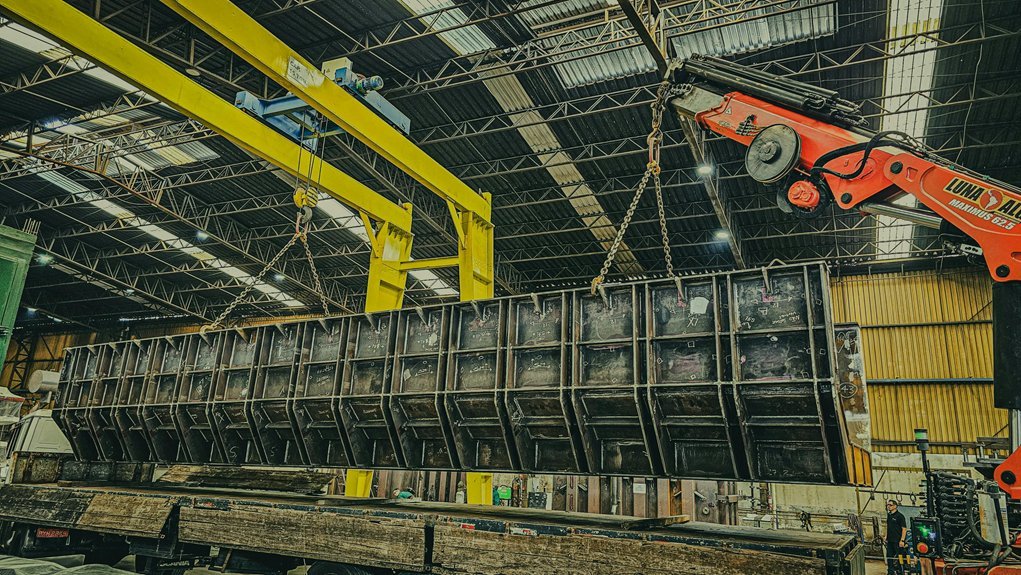
In structural engineering, understanding load transfers and proper beam placement is critical prior to the removal of temporary supports. Load paths dictate how forces are distributed, influencing the integrity of the entire structure. Misalignment of beams can create vulnerabilities, necessitating careful analysis to guarantee stability. Continuous monitoring during this phase is essential, as load redistribution may affect remaining supports. The implications of these factors warrant further examination.
Understanding Load Transfers in Structural Engineering
Load transfers are a fundamental concept in structural engineering, essential for guaranteeing the stability and integrity of structures. Load transfers refer to the process through which forces applied to a structure are distributed through various load paths to its primary supporting elements. This distribution is critical; an adequate understanding of load paths helps prevent excessive stress on individual components, which could compromise structural integrity.
Each load path must be carefully analyzed to ascertain that loads are effectively transferred from the point of application to the ground or foundation. Engineers assess the behavior of materials, geometrical shapes, and connection types to optimize these paths. Disruptions in load transfer can lead to uneven load distribution, resulting in potential failure points. As a result, a thorough comprehension of load transfers is indispensable in the design and assessment phases of any structural project, reinforcing the necessity for precision and foresight in engineering practices.
Importance of Beam Placement
While the effective distribution of loads is essential in structural engineering, the placement of beams plays a pivotal role in this process. Proper beam alignment is critical for maintaining structural integrity, as it guarantees that loads are transferred efficiently through the framework. Misalignment can lead to uneven stress distribution, potentially compromising the overall stability of the structure.
The following table illustrates key elements affecting beam placement:
| Element | Description | Impact on Structure |
|---|---|---|
| Beam Alignment | Correct positioning of beams | Enhances load distribution |
| Load Path | Direction of force transmission | Affects structural stability |
| Support Conditions | Type and placement of supports | Influences overall integrity |
Techniques for Effective Load Distribution
Implementing effective load distribution techniques is crucial for optimizing structural performance and safety. Engineers often utilize various strategies to achieve uniform load distribution across structural elements. One effective technique involves the use of load spreaders, which are designed to redistribute forces over a larger area, minimizing localized stress concentrations. Additionally, the incorporation of moment-resisting frames can enhance load transfer efficiency by allowing beams to share loads more effectively among connected structural members.
Another significant approach is the strategic placement of temporary supports, which can help maintain equilibrium during construction phases. Load path analysis is also essential; it guarantees that all loads are accounted for and directed through intended pathways, reducing potential failures. By employing these effective techniques, engineers can ascertain that structures not only meet safety standards but also exhibit resilience against unforeseen load variations.
Common Challenges During Temporary Support Removal
The removal of temporary supports can pose significant challenges that must be meticulously managed to guarantee structural integrity. These challenges necessitate well-defined removal strategies to mitigate risks associated with structural failure. Key issues typically encountered include:
- Load Redistribution: Ensuring loads are effectively transferred to the permanent structure without causing instability.
- Timing of Removal: Identifying the ideal moment for removal to avoid overloading any remaining supports.
- Monitoring Structural Behavior: Continuously evaluating the performance of the structure during the removal process to detect potential issues.
- Coordination Among Teams: Ensuring effective communication among construction teams to synchronize activities and minimize disruptions.
Addressing these challenges requires a thorough understanding of the structural dynamics involved, as well as the implementation of precise removal strategies tailored to the specific conditions of each project. This careful approach is essential to maintaining safety and structural integrity during the critical phase of temporary support removal.
Best Practices for Ensuring Structural Stability
To guarantee structural stability during construction, it is imperative to adopt a systematic approach that incorporates various best practices. First, a thorough stability analysis should be conducted to identify potential vulnerabilities in the load path prior to any removal of temporary supports. This analysis must consider the distribution of loads and their impact on existing structural elements.
Implementing progressive load transfers is essential; this involves shifting loads gradually from temporary supports to permanent structures to minimize sudden stress changes. Additionally, the use of bracing and shoring techniques can provide temporary stability until permanent connections are established.
Monitoring the structure during the load transfer process guarantees timely detection of any anomalies. Finally, regular communication among team members is crucial for adhering to the stability plan and addressing unforeseen challenges, thereby safeguarding the integrity of the construction project. By following these best practices, structural stability can be effectively maintained throughout the construction phase.
Conclusion
To summarize, meticulous attention to load transfers and beam placement prior to the removal of temporary supports is paramount for ensuring structural stability. The complexity of forces acting within a structure demands an analytical approach to effective load distribution, as misalignment can lead to catastrophic failures. By employing best practices and addressing common challenges, engineers can fortify their designs, transforming potential vulnerabilities into bastions of strength and resilience, akin to fortresses standing unwavering against the test of time.